
Research and Advocacy
At WRRC, we strongly believe in a rigorous academic and scientific approach to our rescue and rehabilitation work with urban wildlife.
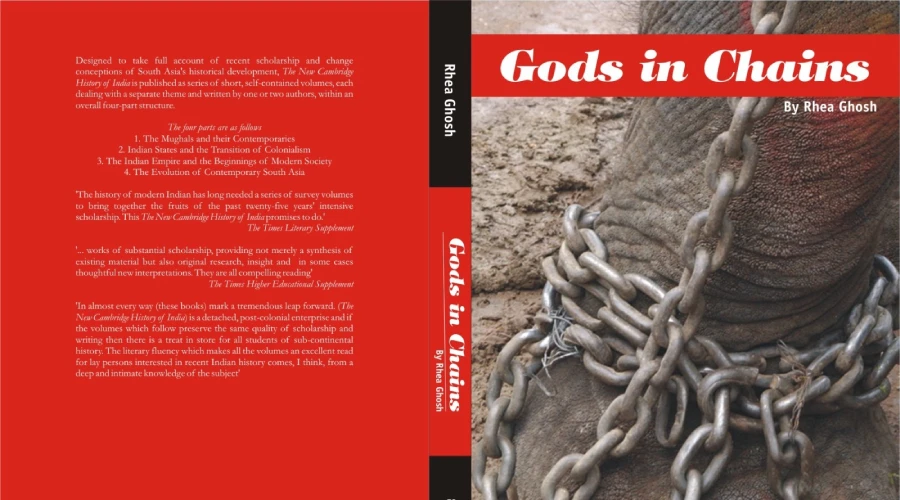
We began our engagement with this captivity of elephants , over a decade ago, with our sister concern Compassion Unlimited Plus Action (CUPA). CUPA partnered with the Asian Nature Conservation Foundation (ANCF) to launch a pioneering initiative to research and document the status of India’s captive elephants.
This led to a cumulative publication comprising of 44 reports titled as ‘Captive Elephants In India – Ecology, Management & Welfare’ which documented almost 1200 captive elephants across 12 states of India, sponsored by World Society for Protection of Animals (WSPA), UK Reports
Following this, a workshop on Welfare Parameters and their Significance for Captive Elephants and their Mahouts in India was organized under the auspices of the Project Elephant Directorate, Ministry of Environment and Forests (MoEF),Govt. of India, to analyse the large set of data collected initially, parameters and their properties were identified, defined and ratings for each parameter and its property were assigned. Later, this entire process was critically reviewed by experts through the workshop.
Reports on Captive Elephants
Captive Elephants at Bandipur Forest Camp
Captive Elephants in Bardia National Park, Nepal
Captive Elephants in Bihar
Captive Elephants in Chandigarh
Captive Elephants in Circuses
Captive Elephants in Forest Camps in India
Captive Elephants of Kerala
Captive Elephants in Sakrebyle Forest Camp Karnataka, Southern India
Captive Elephants in West Bengal
Captive Elephants in Zoos
Captive Elephants of Andaman Islands
Captive Elephants of Andhra Pradesh
Captive Elephants of Gujarat
Captive Elephants of Karnataka
Captive Elephants of Maharashtra
Captive Elephants of Tamil Nadu
Captive Elephants of Temples of India
Data base for Elephants and their Mahouts in Tamil Nadu
Database for Captive Elephants and their Mahouts in Andaman
Database for Captive Elephants and their Mahouts in Karnataka
Ecology and Management of Captive Elephants in Forest Camps of Tamil Nadu
Elephants at Amer Fort Jaipur 2016 Elephants used in Tourism
Elephants in Sonepur mela
Guruvayur Temple Evaluation 2014
Identification of an effective and robust model of elephant keeping and keeper welfare
Management Strategies for Captive Elephants Infected with Tuberculosis in Asian Range Countries
Mortality of Mahouts by Captive Asian Elephants in Kerala, Southern India
Selection of Specific Age and Sex of Asian Elephant in Captivity as Cultural and Economic Identity
Spatial Distribution of Captive Elephant Locations in Karnataka, Southern India
Temperature Effect on Captive Asian Elephants in Arid Regions of North India
Travelling and Begging Elephants in India
Report on the treatment of Elephants in Jaipur, India 2016
Wandering Elephants of Punjab
Web Version Elephants of Shri Kanchi Kamakoti
Welfare and Management of Elephants in Captivity – Workshop Proceedings
Welfare Status of Elephant Poornima
Welfare Status of Elephant Lakshmi
Welfare Status of Elephant Satya Geetha
Welfare status of Lucy the Elephant
Welfare Status of Temple Elephant Mariappan
Welfare Status of Temple Elephant Menaka
Welfare Status of Temple Elephant Prakruthi
Welfare Status of Temple Elephant Yashaswi
Welfare Assessment of Elephant Girija Prasad
Working with elephant mahouts
Captive Elephants of Rajasthan
Captive Elephants under Private Ownership in India
Andhra Lakshmi
Reports on Captive Elephants
Individual Captive Elephant Case Studies in India
| Sr No | Name | Download |
|---|---|---|
| 1 | Welfare Status of Temple Elephant Menaka | Download |
| 2 | Welfare Status of Elephant Poornima | Download |
| 3 | Welfare Status of Elephant Lakshmi | Download |
| 4 | Welfare status of Lucy the Elephant | Download |
| 5 | Welfare Assessment of Elephant Girija Prasad | Download |
| 6 | Welfare Status of Elephant Satya Geetha | Download |
| 7 | Welfare Status of Temple Elephant Prakruthi | Download |
| 8 | Welfare Status of Temple Elephant Yashaswi | Download |
| 9 | Welfare Status of Temple Elephant Mariappan | Download |
| 10 | Assessment of Welfare and Management Status of Elephants Sandhya, Jayanthi and Indumathi of Sri Kanchi Kamakoti Mutt, Tamil Nadu | Download |
| 11 | Andhra Lakshmi | Download |
Captive Elephants in Different Management Regimes in India
| Sr No | Name | Download |
|---|---|---|
| 12 | Captive Elephants in Forest Camps in India | Download |
| 13 | Travelling and Begging Elephants in India | Download |
| 14 | Captive Elephants of Temples of India | Download |
| 15 | Captive Elephants in Zoos | Download |
| 16 | Captive Elephants in Circuses | Download |
| 17 | Elephants in Sonepur Mela | Download |
| 18 | Wandering Elephants of Punjab | Download |
| 19 | Captive Elephants of Karnataka | Download |
| 20 | Database for Captive Elephants and their Mahouts in Karnataka, Southern India | Download |
| 21 | Spatial Distribution of Captive Elephant Locations in Karnataka, Southern India | Download |
| 22 | Captive Elephants of Tamil Nadu | Download |
| 23 | Database for Elephants and their Mahouts in Tamil Nadu | Download |
| 24 | Captive Elephants of Gujarat | Download |
| 25 | Captive Elephants of Andhra Pradesh | Download |
| 26 | Captive Elephants of Maharashtra | Download |
| 27 | Captive Elephants of Rajasthan | Download |
| 28 | Report on the treatment of Elephants in Jaipur, 2016 | Download |
| 29 | Documentation on the Elephants in Amer Fort, Jaipur, 2016 | Download |
| 30 | Captive Elephants of Kerala | Download |
| 31 | Report on the Welfare and Veterinary Status of the Captive Elephants at Punnathur Kotta, Guruvayur Devaswom Board, Thrissur, Kerala | Download |
| 32 | Captive Elephants of Andaman Islands | Download |
| 33 | Database for Captive Elephants and their Mahouts in Andaman | Download |
| 34 | Captive Elephants in West Bengal | Download |
| 35 | Captive Elephants in Bihar | Download |
| 36 | Captive Elephants in Assam | Download |
| 37 | Captive Elephants under Private Ownership in India | Download |
Specific Zoos with Captive Elephants
| Sr No | Name | Download |
|---|---|---|
| 38 | Captive Elephants in Chatbir Zoo, Chandigarh | Download |
Miscellaneous Studies of Captive Elephants and Related Matters
| Sr No | Name | Download |
|---|---|---|
| 39 | Establishing and Executing Care Centres for Captive Elephants | Download |
| 40 | Working with Elephant Mahouts | Download |
| 41 | Temperature Effect on Captive Asian Elephants in Arid Regions of North India | Download |
| 42 | Management Strategies for Captive Elephants Infected with Tuberculosis in Asian Range Countries | Download |
| 43 | Selection of Specific Age and Sex of Asian Elephant in Captivity as Cultural and Economic Identity | Download |
| 44 | Mortality of Mahouts by Captive Asian Elephants in Kerala, Southern India | Download |
| 45 | Identification of an Effective and Robust Model of Elephant Keeping and Keeper Welfare | Download |
| 46 | Working with Elephant Mahouts (duplicate entry in list) | Download |
| 47 | Welfare and Management of Elephants in Captivity – Workshop Proceedings | Download |
| 48 | Captive Elephants in India – Ecology, Management and Welfare | Download |
Captive Elephants in Specific Government Forest Camps in India & Nepal
| Sr No | Name | Download |
|---|---|---|
| 49 | Captive Elephants at Bandipur Forest Camp | Download |
| 50 | Captive Elephants in Sakrebylu Forest Camp Karnataka, Southern India | Download |
| 51 | Ecology and Management of Captive Elephants in Forest Camps of Tamil Nadu | Download |
| 52 | Captive Elephants in Bardia National Park, Nepal | Download |
Papers and articles published by the WRRC Veterinarians
The research papers presented here by Dr. Nirupama and Dr. Roopa Satish demonstrates commitment to veterinary medicine, with a particular focus on wildlife health and rehabilitation. Dr. Nirupama’s work is centered on the clinical management of diverse wild animal species, including case studies on orthopedic and neurological conditions in macaque and snake species, the treatment of injuries from human-wildlife conflict, and strategies for rehabilitating orphaned and rescued animals. Complementing this, Dr. Roopa’s research delves into broader areas of wildlife pathology, disease diagnosis, and conservation, highlighting parasitic infections in birds and mortality factors in wild species.She has co-authored several papers published in peer-reviewed journals, focusing on topics ranging from veterinary pathology to conservation and human-wildlife interactions.


Dr. Nirupama has presented and published abstracts on a wide range of topics related to veterinary science, with a particular focus on wildlife rehabilitation and clinical management of various animal species. Her work has been featured at several national and state-level conferences.
The research papers presented here by Dr. Nirupama and Dr. Roopa Satish demonstrates commitment to veterinary medicine, with a particular focus on wildlife health and rehabilitation. Dr. Nirupama’s work is centered on the clinical management of diverse wild animal species, including case studies on orthopedic and neurological conditions in macaque and snake species, the treatment of injuries from human-wildlife conflict, and strategies for rehabilitating orphaned and rescued animals. Complementing this, Dr. Roopa’s research delves into broader areas of wildlife pathology, disease diagnosis, and conservation, highlighting parasitic infections in birds and mortality factors in wild species.She has co-authored several papers published in peer-reviewed journals, focusing on topics ranging from veterinary pathology to conservation and human-wildlife interactions.
- XVII National Technical Conference of Indian Association of Women Veterinarians(NTR college of Veterinary Science, Andhra Pradesh, November 29-30, 2023)
- Clinical Management of electric burn in Bonnet Macaque (Macaca Radiata): This abstract details the clinical approach and treatment for a Bonnet Macaque that suffered from electric burns.
- Hernia in Bonnet Macaque (Macaca Radiata): A case study: This case study outlines the diagnosis and management of a hernia in a Bonnet Macaque.
- IAWV- State-level technical workshop(Mysore University, May 30-31, 2024)
- Non-invasive management of spinal injury in snakes: Dr. Nirupama’s work here explores methods for treating spinal injuries in snakes without surgical intervention.
- Fracture of lateral wall of orbit diagnosed with Computed Tomography in Bonnet Macaque: This abstract highlights the use of CT scans for diagnosing a specific type of facial bone fracture in a Bonnet Macaque.
- Non-invasive management of multiple fractures in Bonnet Macaque: This work describes a non-surgical approach to treating multiple fractures in a Bonnet Macaque.
- 18th Conference of Indian Association of Women Veterinarian (IAWV) and National Dialogue(DUVASU, Mathura, November 13-14, 2024)
- Rehabilitating Orphaned Birds; Hand Rearing and Release Strategies: This abstract covers the techniques and strategies for successfully raising orphaned birds for release back into the wild.
- Management of skin infection in Indian flap shell turtles: This presentation details the treatment protocol for skin infections found in Indian flap shell turtles.
- Treatment and Rehabilitation of wild animals affected by glue traps: This work addresses the medical and rehabilitative care required for animals injured by glue traps.
- Chemical immobilization of wildlife-human conflict animals: This abstract discusses the safe and effective use of chemical agents to immobilize wild animals involved in human-wildlife conflict situations.
- Clinical management of neurological disorder in snake: A case study: This case study provides a detailed account of diagnosing and managing a neurological disorder in a snake.
- Zoonotic Transmission of Dermotophytosis from cats to human: This abstract addresses the public health aspect of a fungal skin infection, detailing its transmission from cats to humans.
- 33rd National Congress of Veterinary Parasitology and National Symposium(Telangana Veterinary University, December 17-19, 2024)
- Identification of ectoparasite in wild animals: This abstract discusses the methods used to identify ectoparasites on wild animals.
- Pentastome infection in a common rat snake: A specific case of parasitic infection in a common rat snake is detailed in this abstract.
- 15th Annual Convention of the Association of Indian Zoo & Wildlife Veterinarians & International Zoo and Wildlife Health Conference(School of Wildlife Forensic and Health, MP, April 24-26, 2025)
- ENDOSCOPIC REMOVAL OF FISH HOOK IN INDIAN BLACK TURTLE: A CASE STUDY: This case study describes the use of an endoscope to surgically remove a fish hook from an Indian Black Turtle.
- HAND REARING AND REHABILITATION OF PARAKEETS: This abstract presents techniques for successfully hand-rearing and rehabilitating parakeets.
- RECOVERY AND REHABILITATION OF INDIAN PEAFOWL (PAVO CRISTATUS) FROM POISONING: This work details the treatment and recovery process for an Indian peafowl affected by poisoning.
- SURGICAL MANAGEMENT OF TRAUMATIC WOUND IN SNAKES: This abstract covers the surgical techniques used to treat traumatic wounds in snakes.