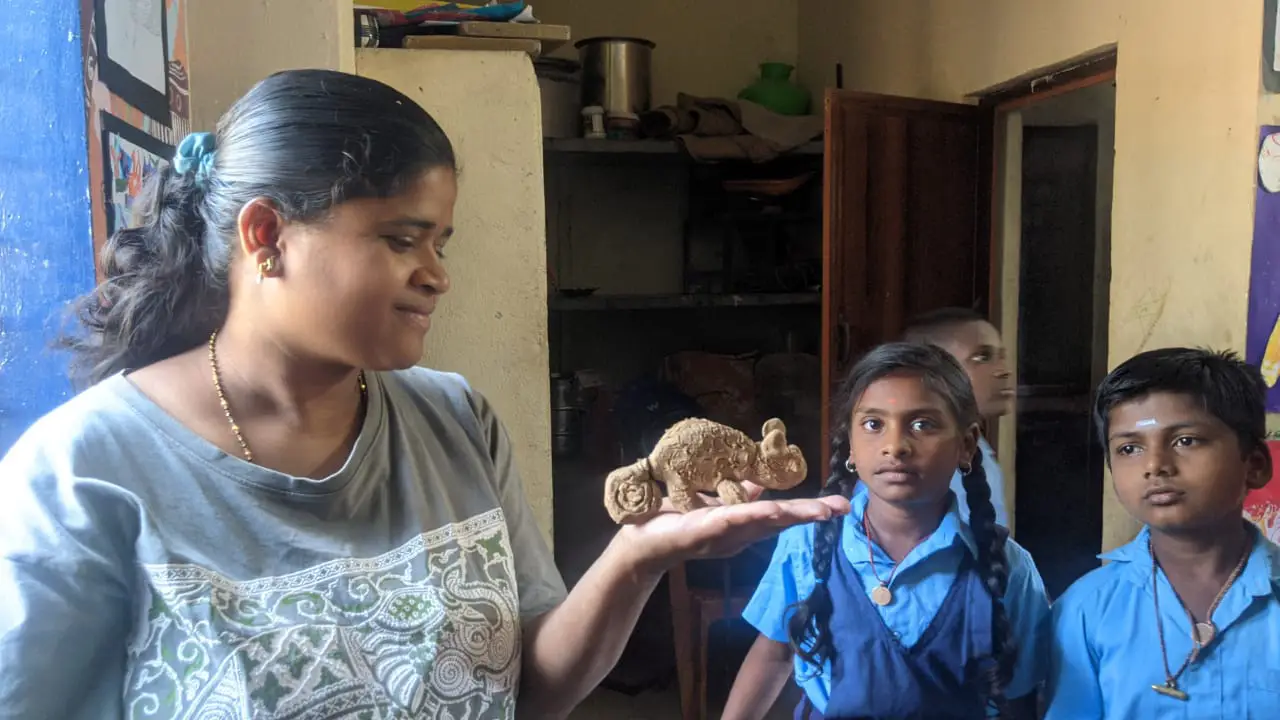
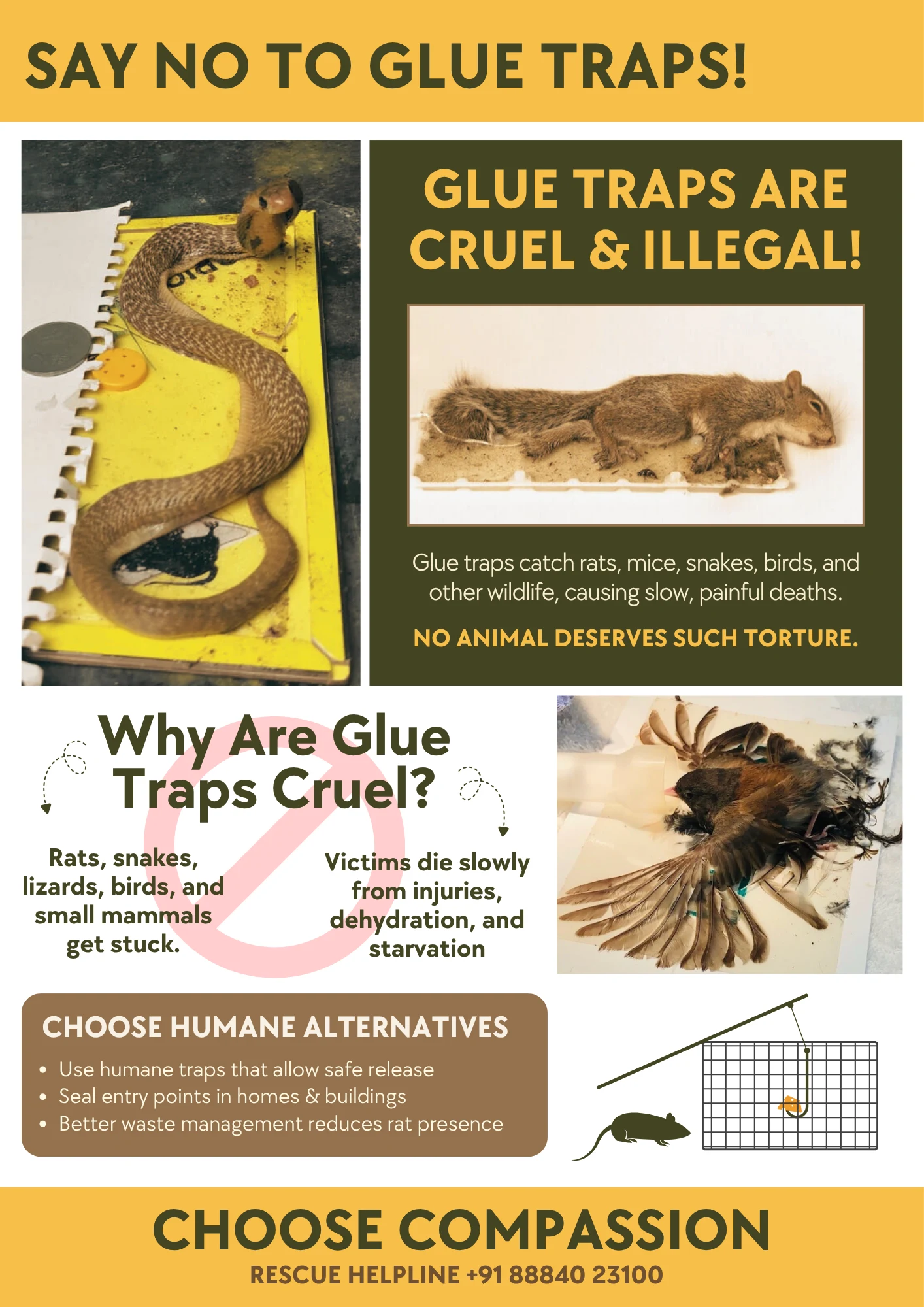
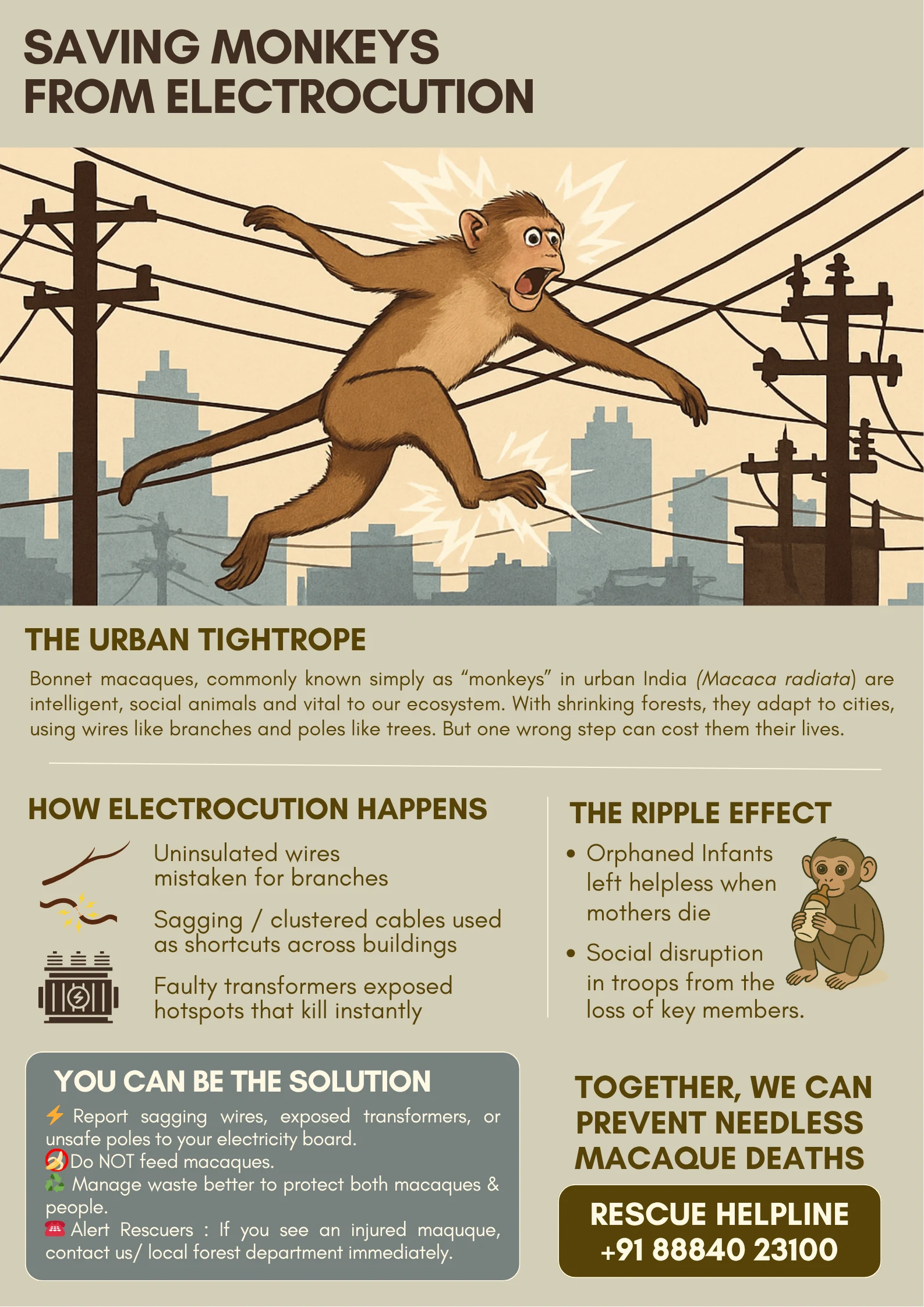
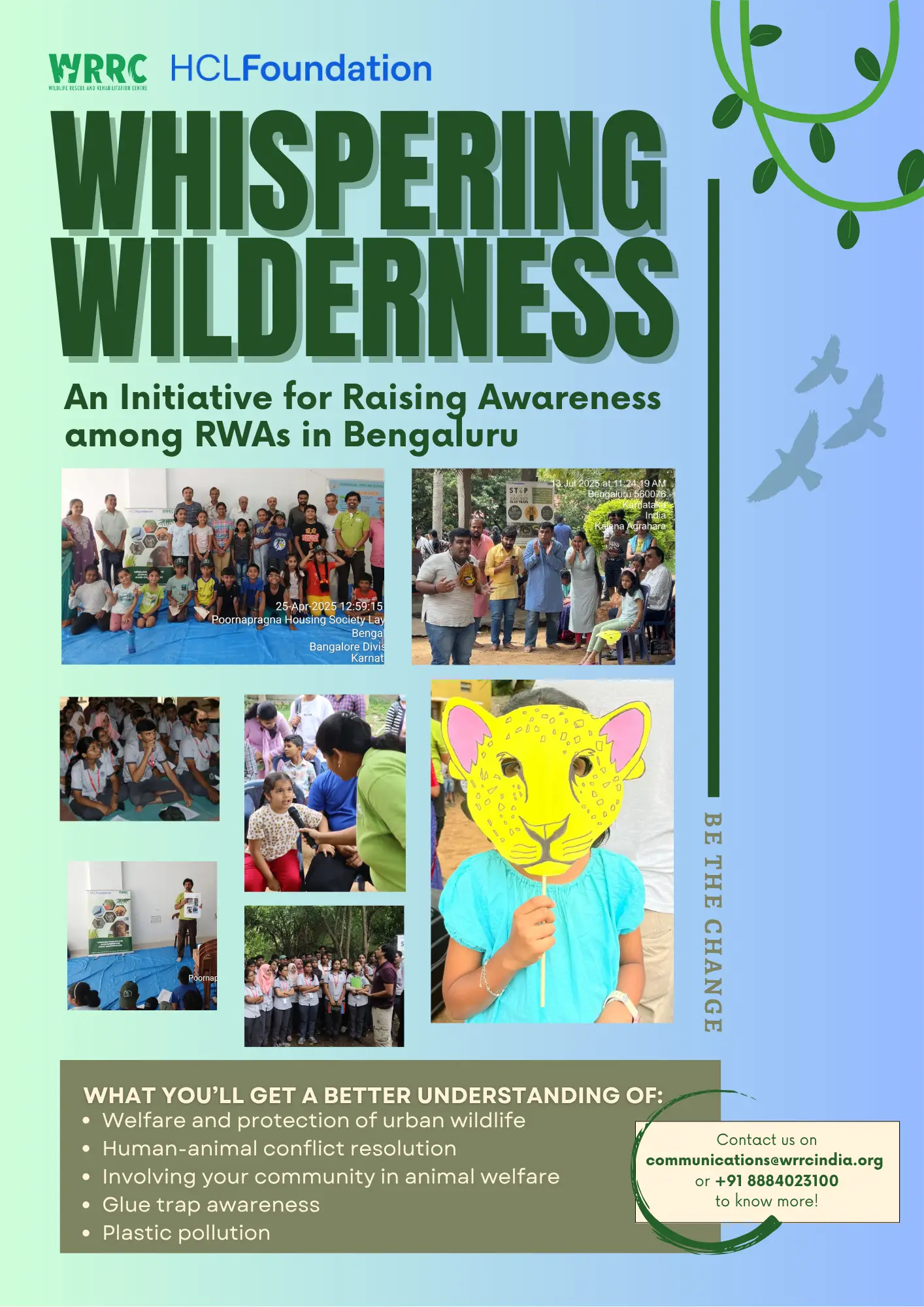
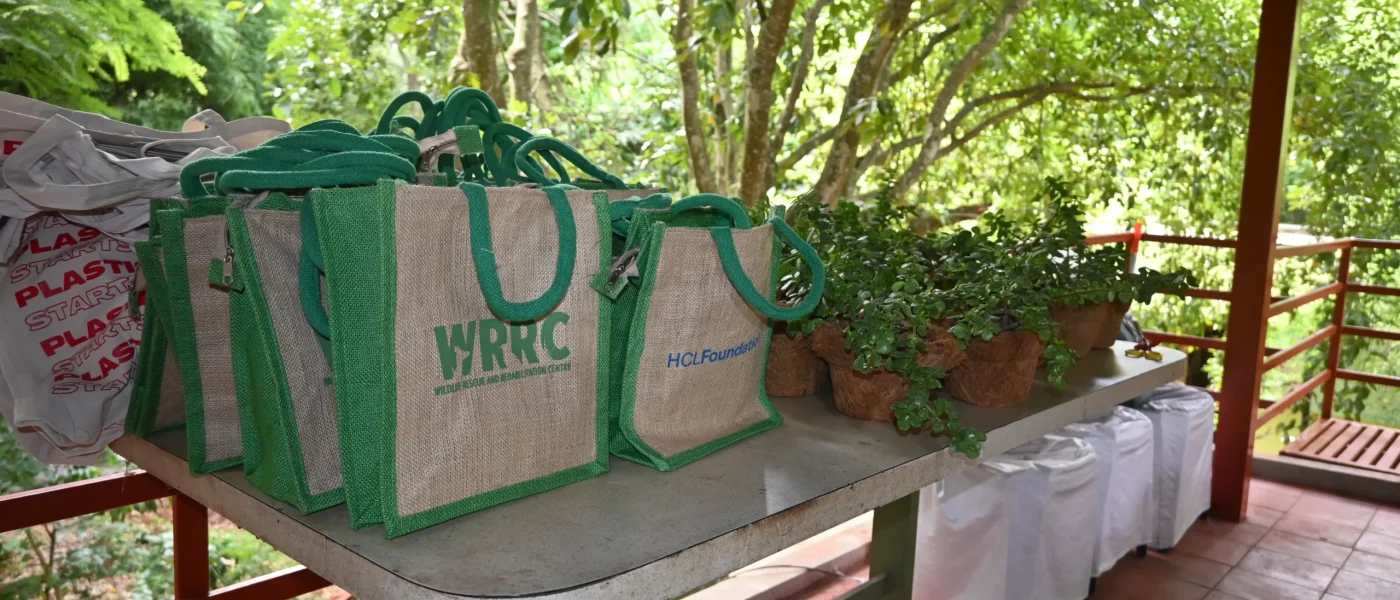
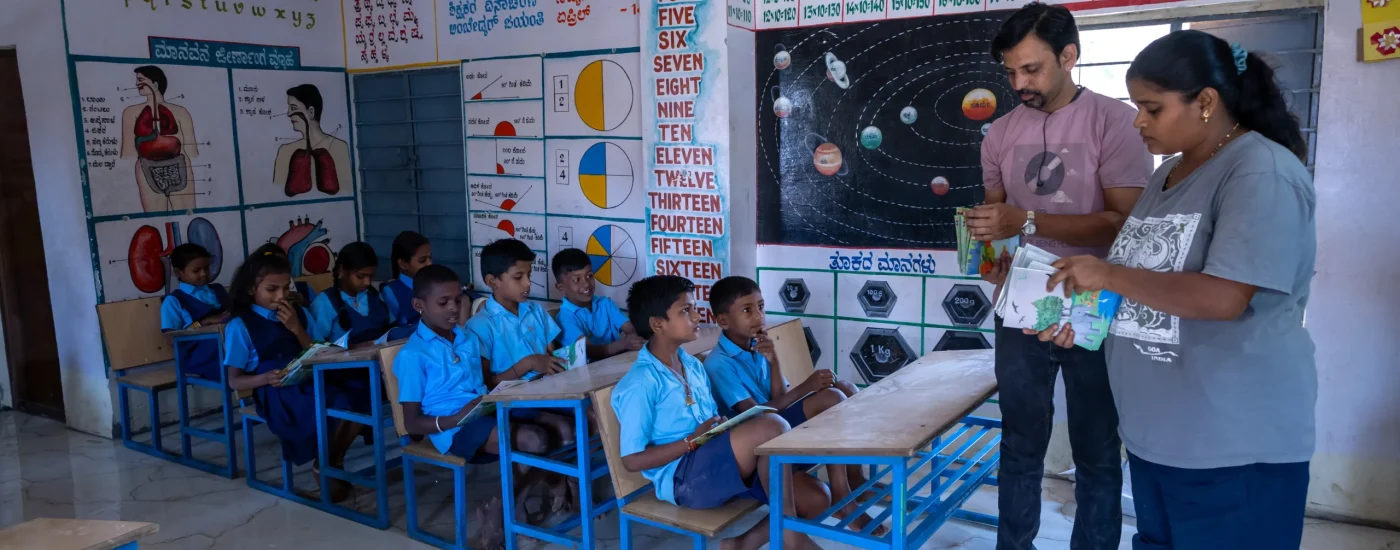
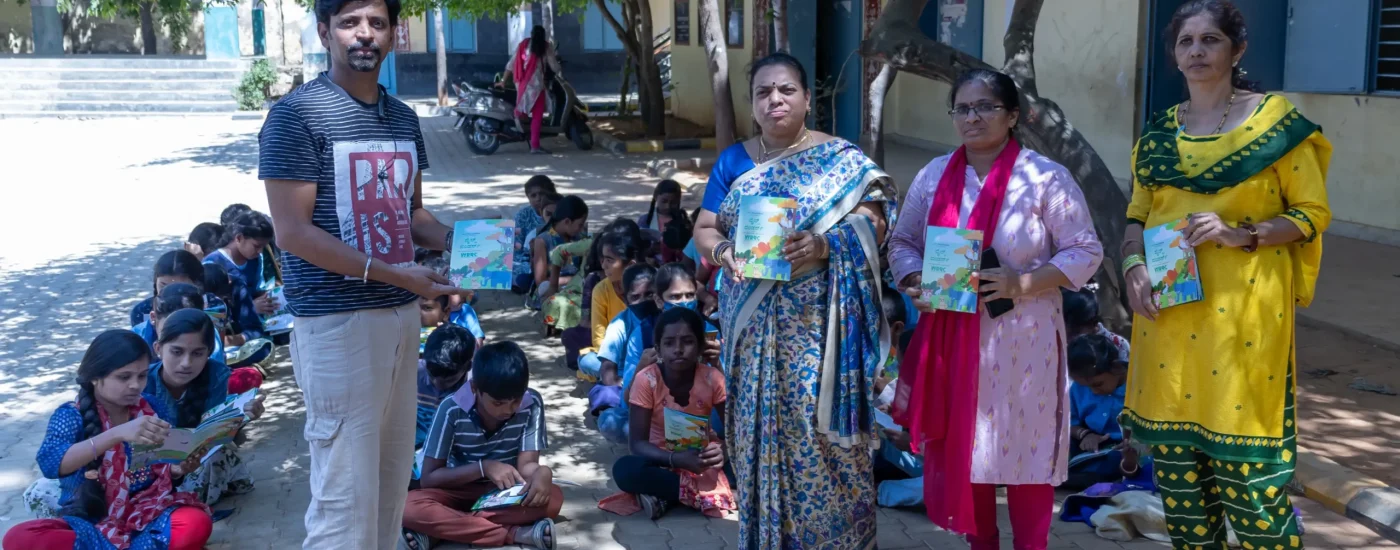
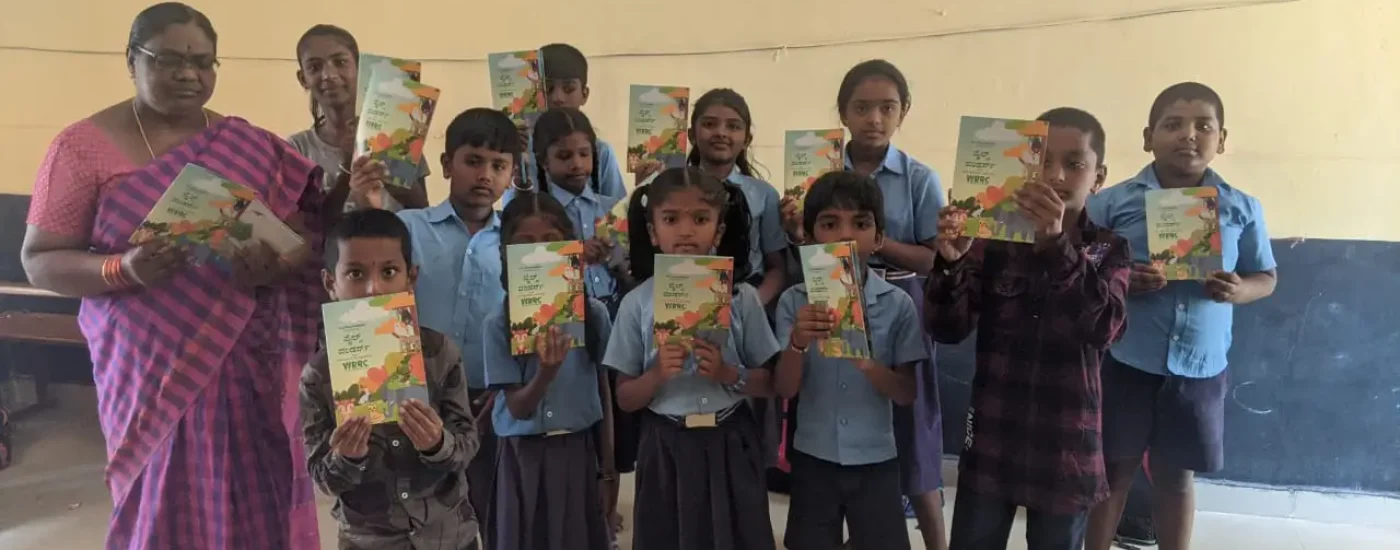
WRRC’s Outreach awareness Program- Fostering Coexistence and Conservation The Wildlife Rescue and Rehabilitation Centre (WRRC) actively engages in comprehensive outreach programs designed to educate and raise awareness across various demographics. These initiatives are crucial in promoting wildlife conservation, mitigating human-animal conflict, and fostering responsible coexistence with local fauna. The Outreach program is specifically conducted in Bangalore, targeting people who live around the forest. These sessions cover vital topics such as wildlife conservation, snake bites, the illegal pet trade, and plastic pollution. Over 100 such programs have been conducted, reaching more than 8000 people, significantly impacting the younger generation and small thriving communities to understand take environmental concerns responsibility and proactivity render service towards it. The Awareness Programs focus on educating broader communities. These sessions delve into humane animal treatment, local wildlife protection, effective human-animal conflict resolution, and sustainable measures for harmonious living with wildlife. Analyzing the impact over recent financial years, WRRC has demonstrated consistent dedication to its outreach mission. In FY 2022-23, the organization conducted 17 outreach programs, benefiting 1551 individuals. The following year, FY 2023-24, saw a significant increase, with 36 outreach programs reaching 2114 beneficiaries. While the number of programs slightly decreased to 33 in FY 2024-25, the impact continued to grow, benefiting 2661 individuals, underscoring the growing engagement and reach of the programs.
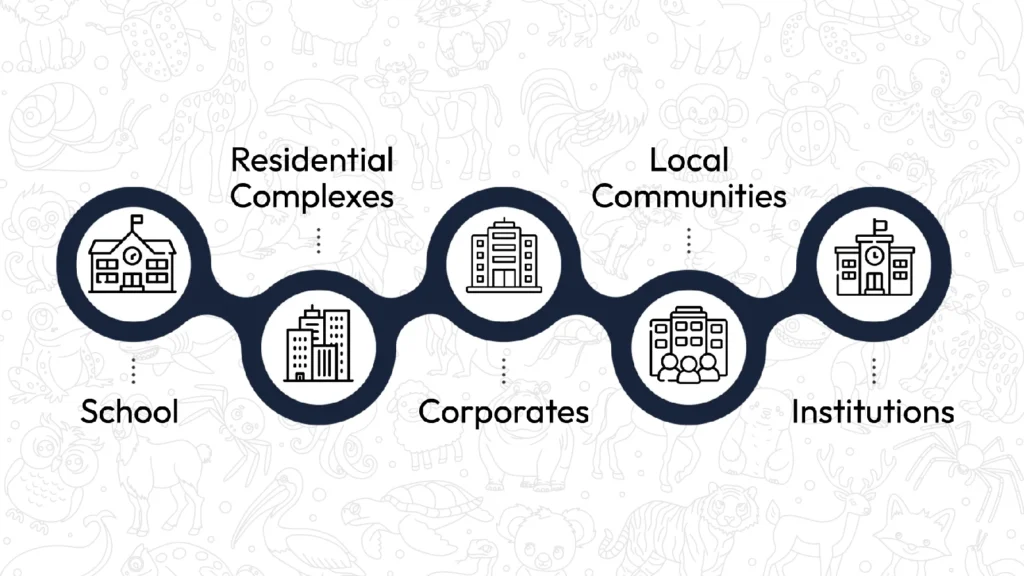
Educational Institutes
RWA
Communities
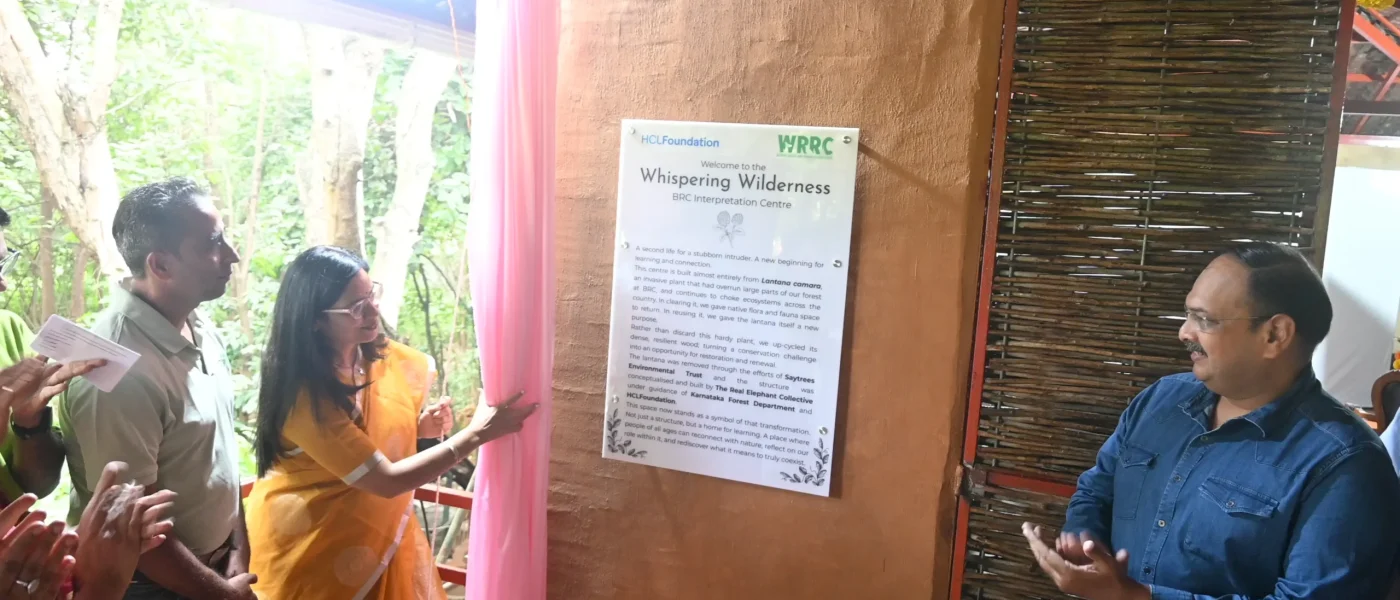
Whispering Wilderness
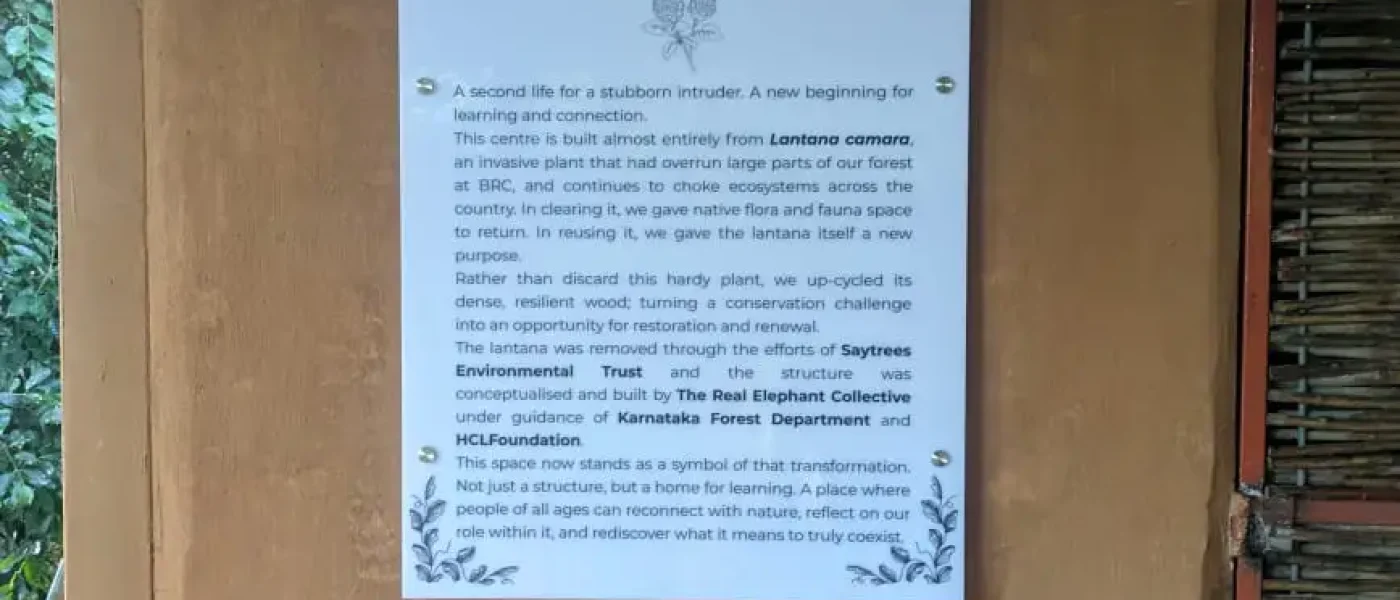
Educating communities through an interpretation centre crafted from invasive Lantana.
The Wildlife Rescue and Rehabilitation Centre (WRRC) is deeply committed to fostering a harmonious coexistence between humans and wildlife through its extensive and impactful outreach programs. These initiatives are designed to educate diverse segments of the community, raise awareness about critical conservation issues, and empower individuals to become active participants in safeguarding India’s rich biodiversity.
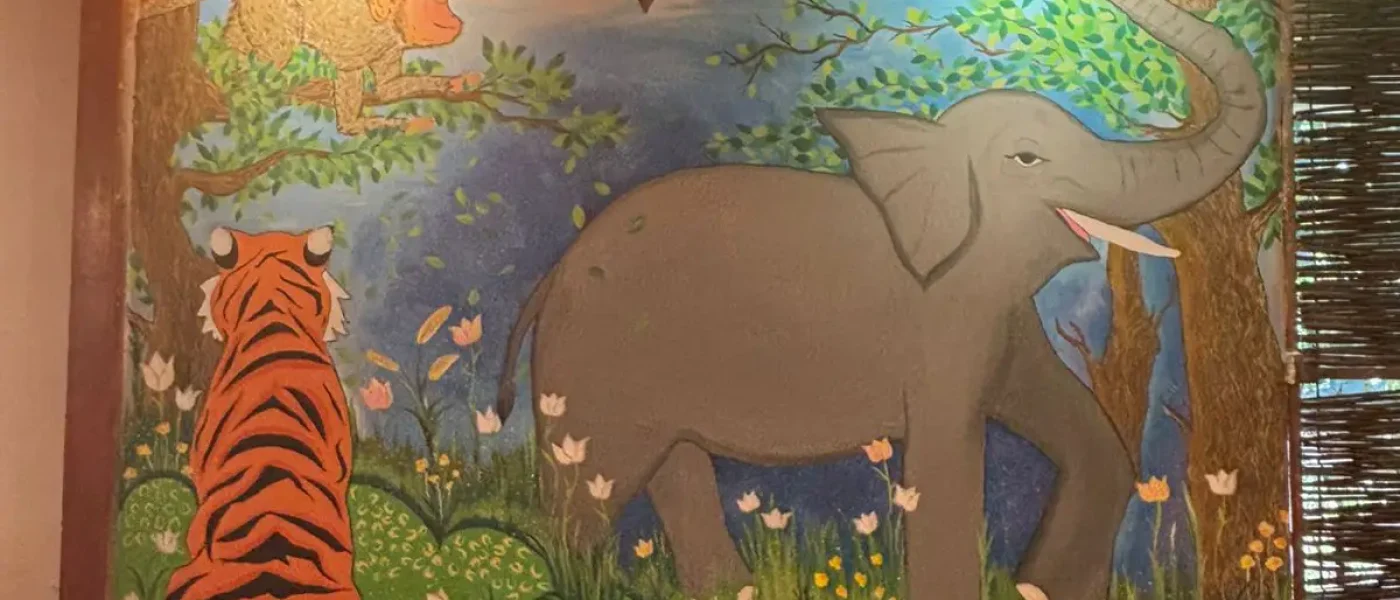
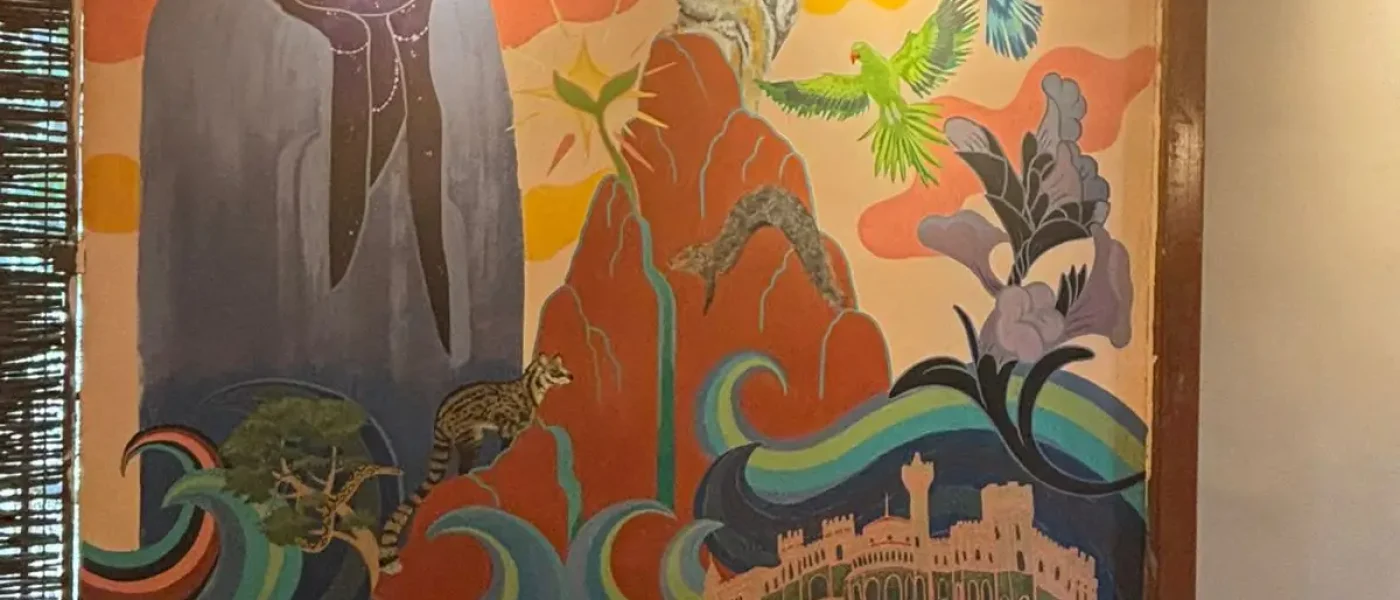
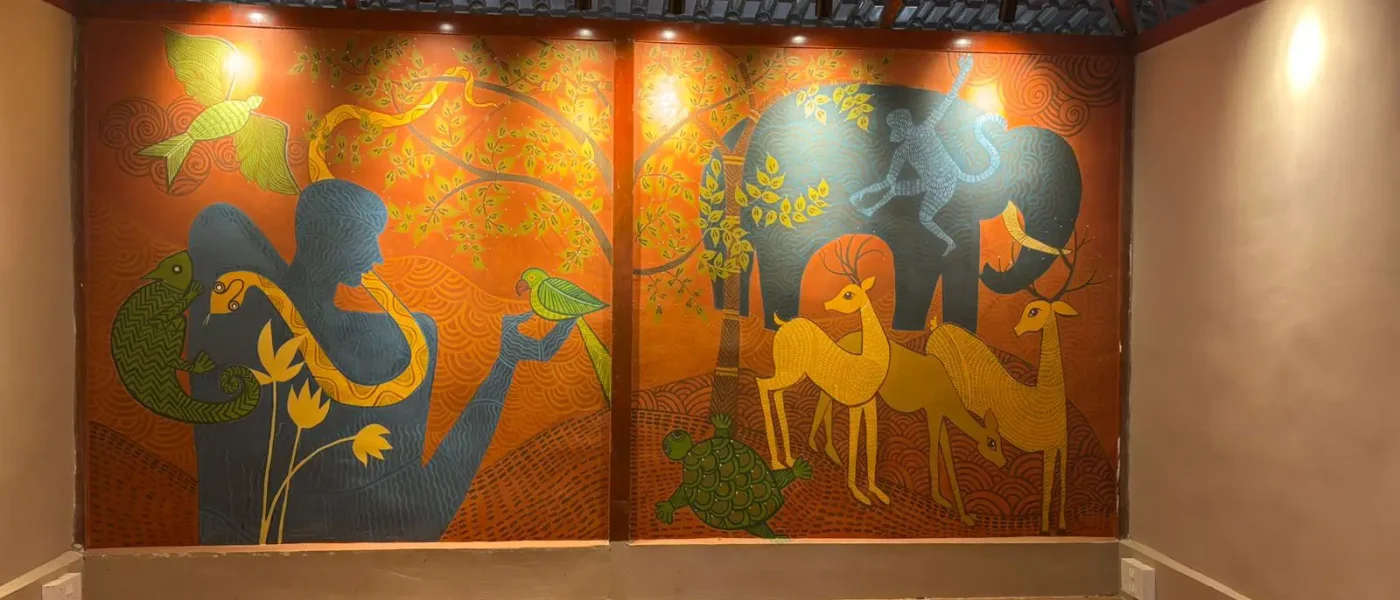
A significant recent development in WRRC’s educational endeavors is the establishment of an innovative interpretation centre at the Bannerghatta rehabilitation facility. This unique center, notably built using sustainable Lantana weed, serves as a vital hub where students and wildlife enthusiasts, can visit to gain profound insights into the critical work undertaken by WRRC. Here, visitors can learn firsthand about the complexities of human-animal conflict, understand the unfortunate casualties that often result from such interactions, and explore various solutions and preventative measures. The centre offers an immersive learning experience, bridging the gap between theoretical knowledge and practical conservation efforts.
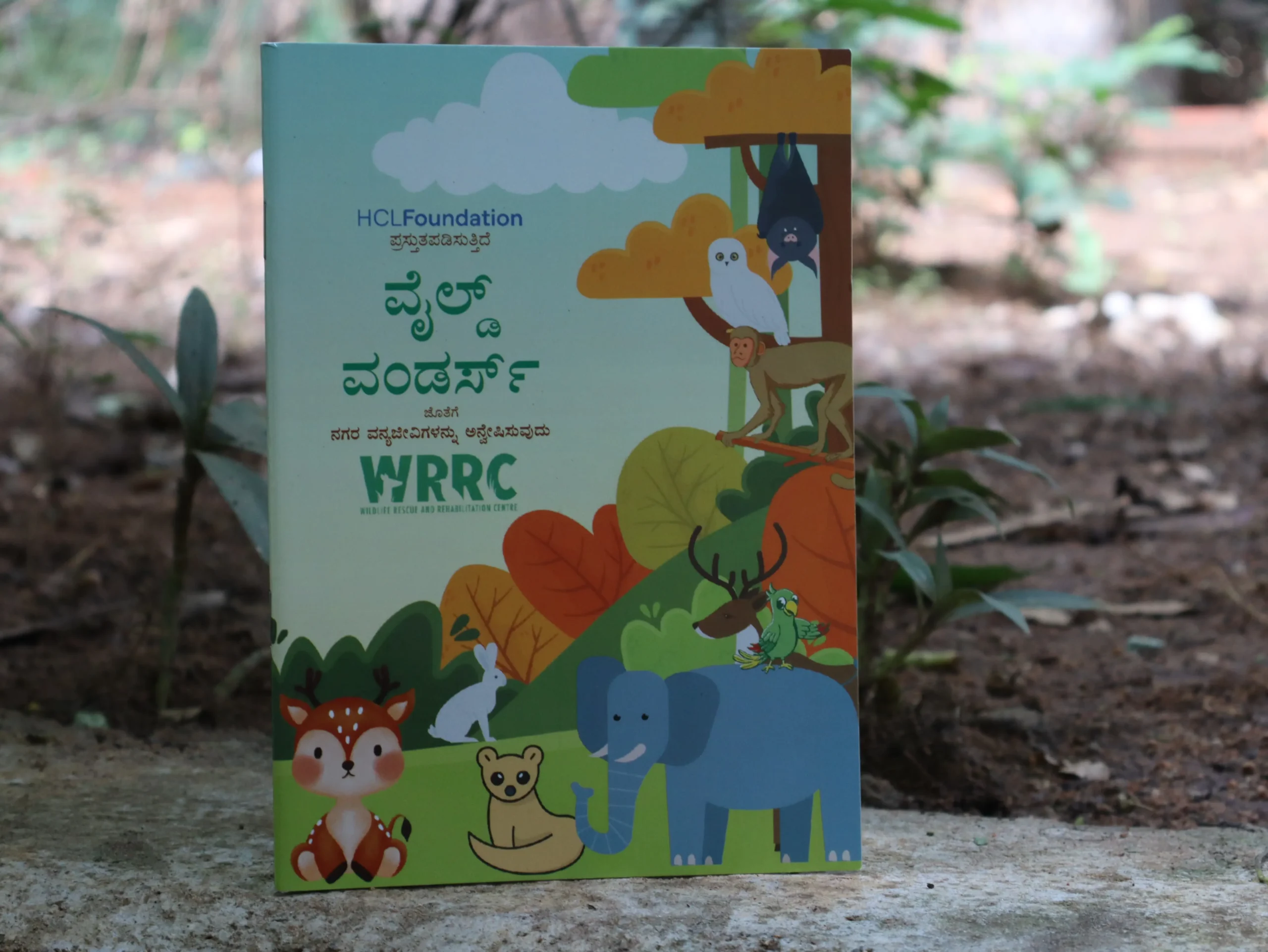
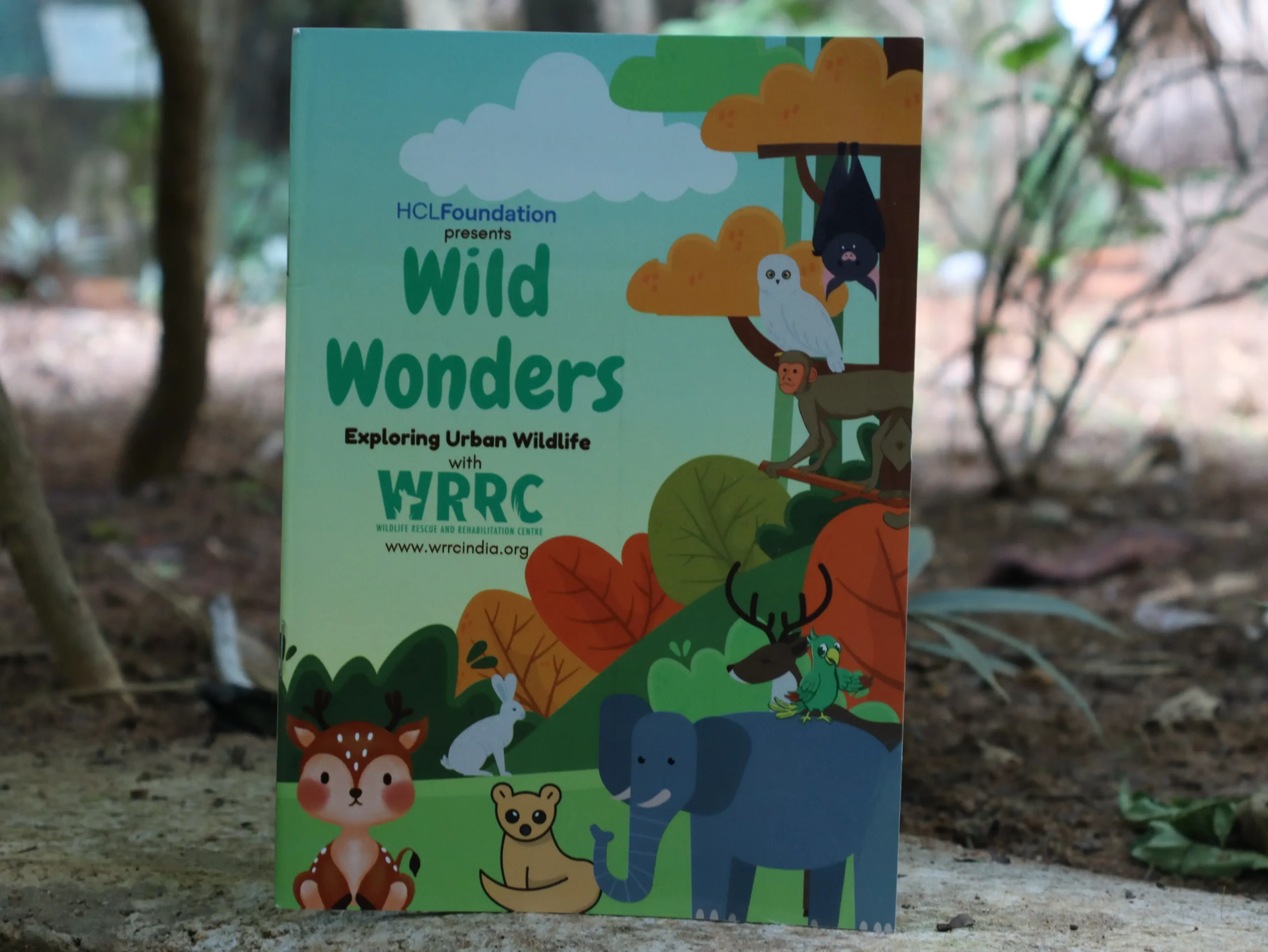
Wild Wonders
Empowering communities for a future of human-wildlife harmony
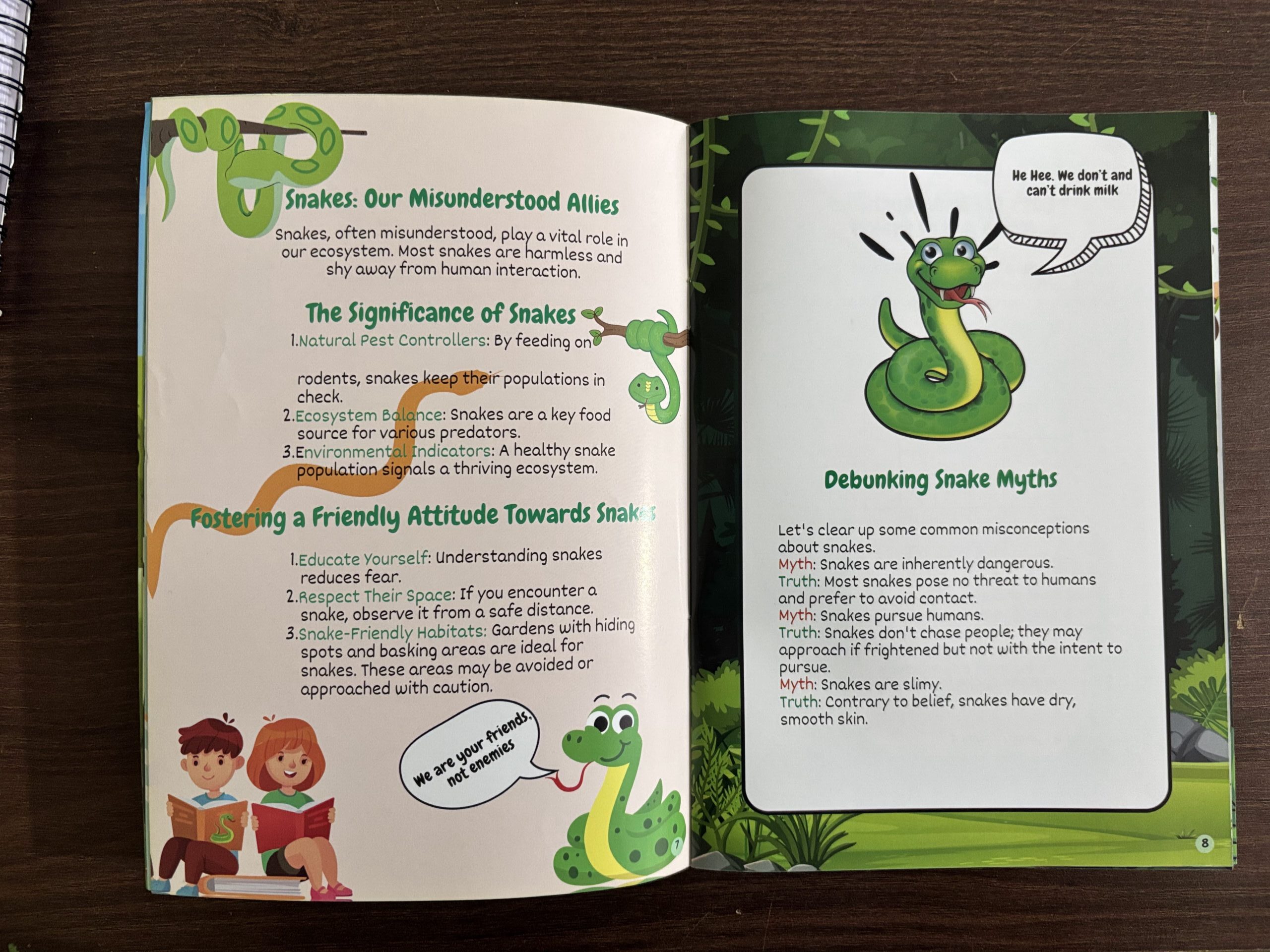
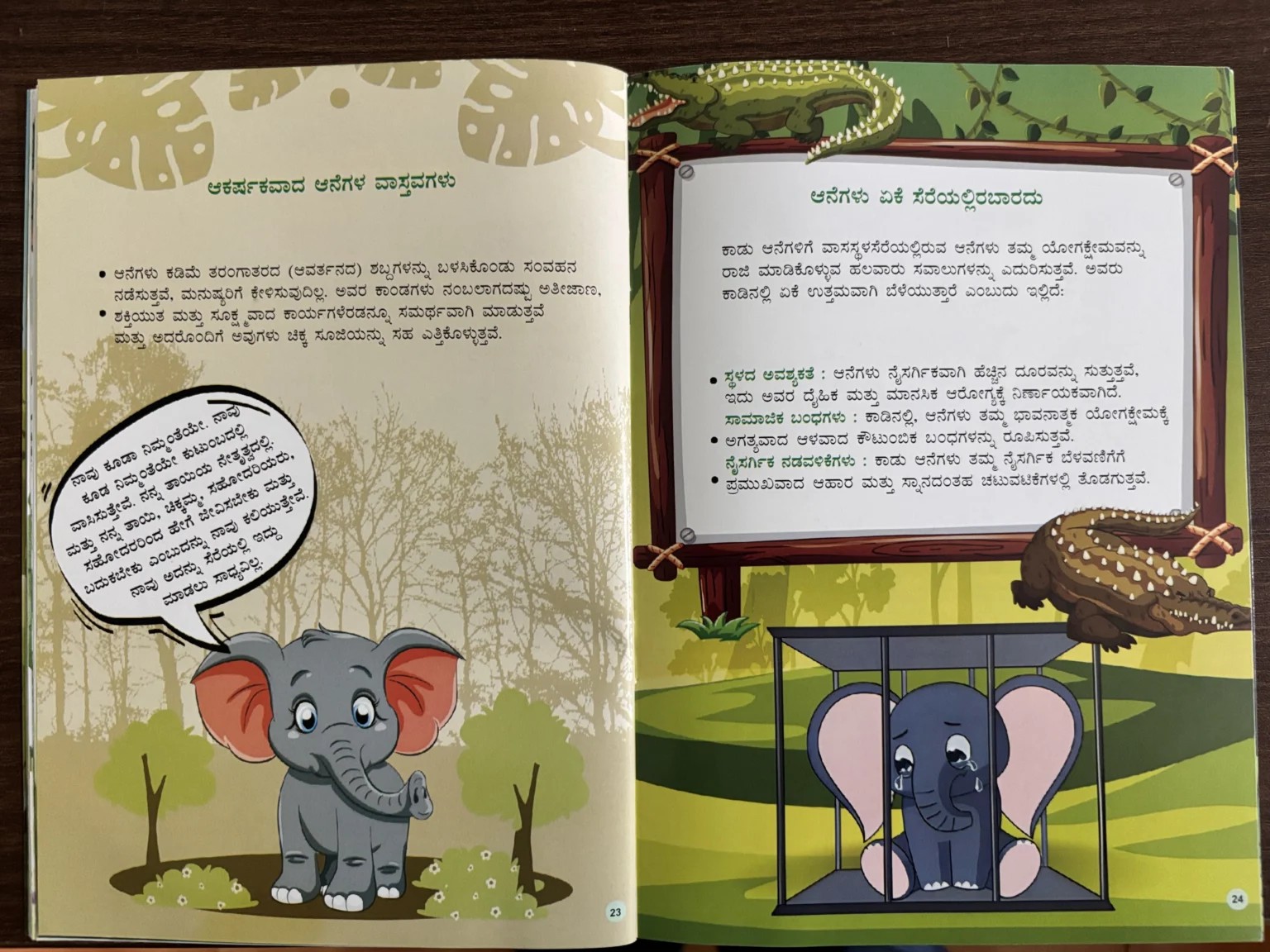
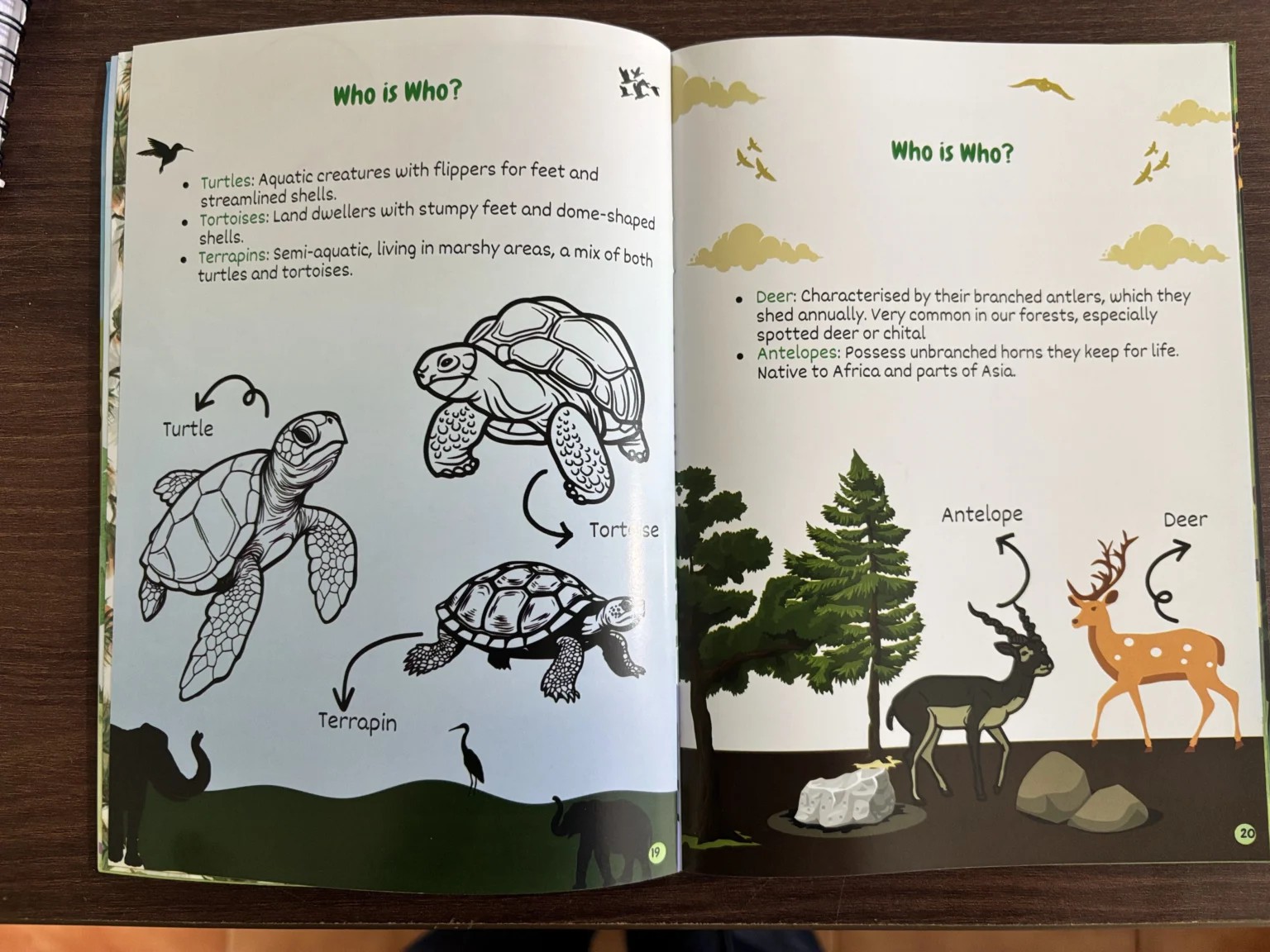
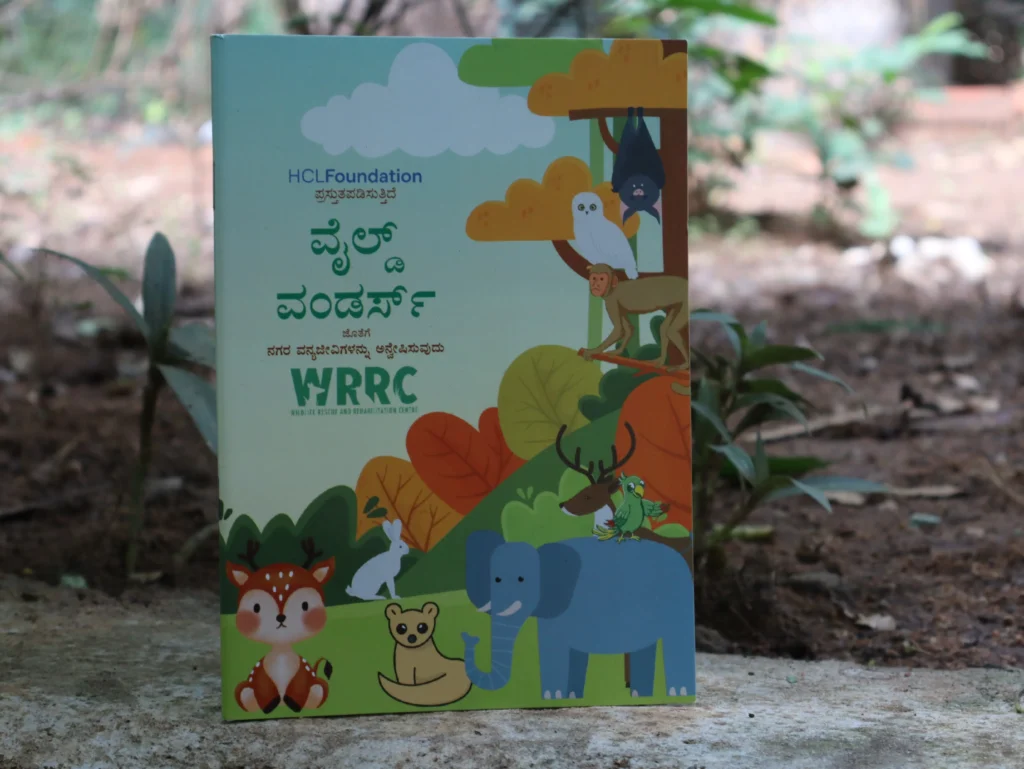
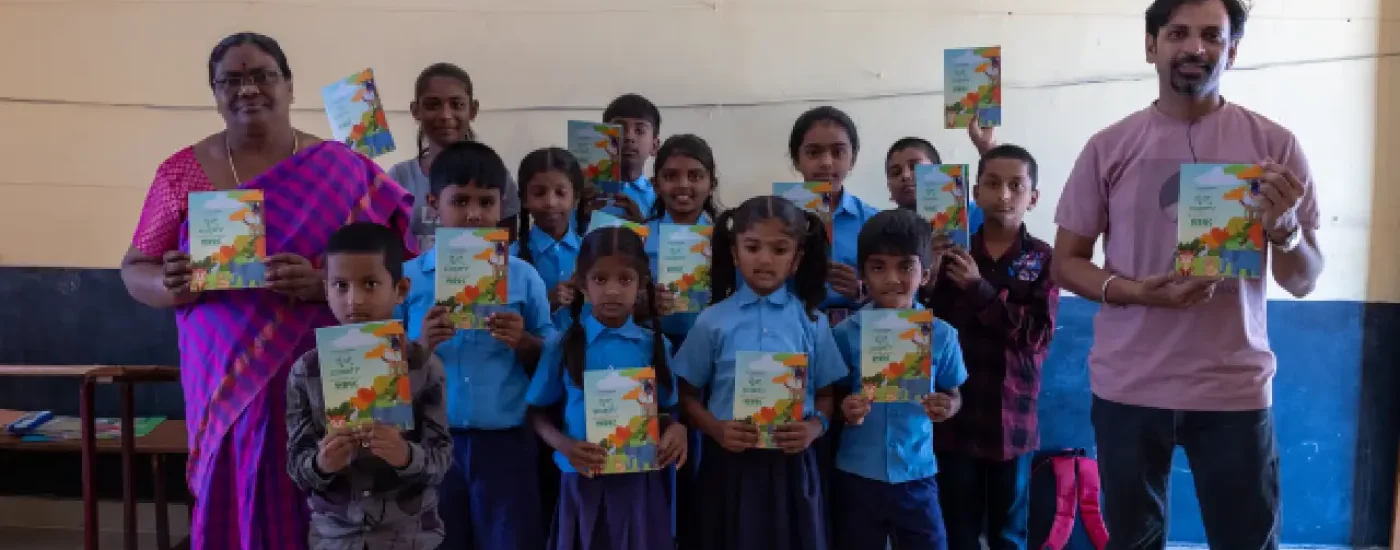
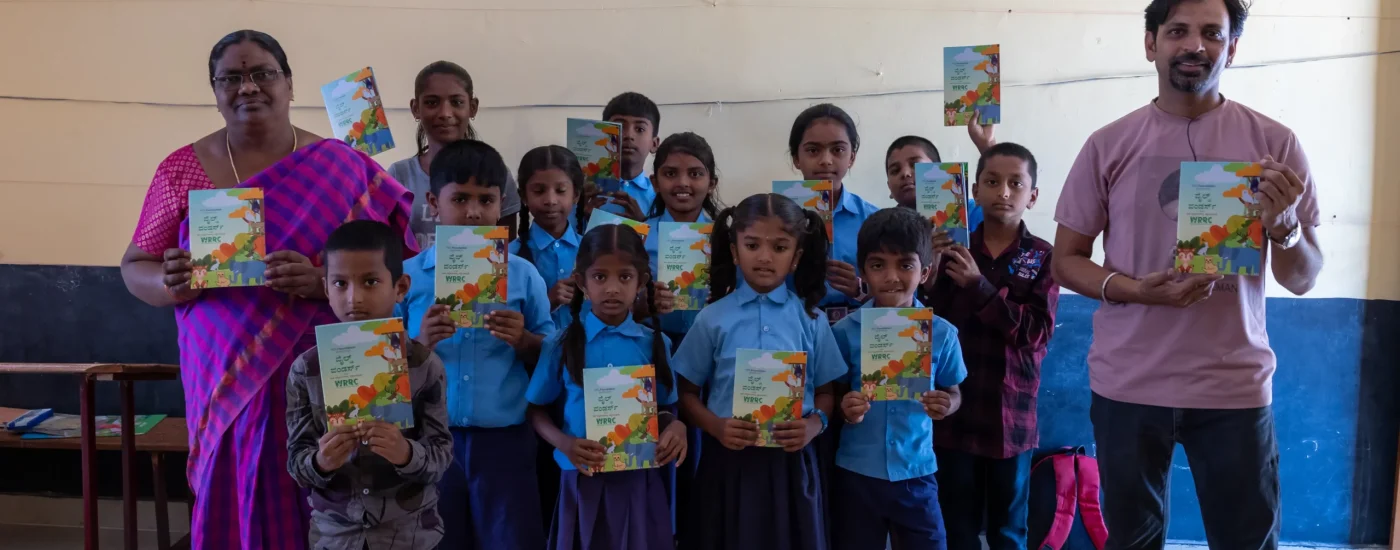
When WRRC started their outreach programs in collaboration with HCLFOUNDATION , the team quickly identified a significant gap in children and small community’s understanding regarding urban wildlife and its challenges. We realized that many common beliefs were, in fact, misinformation, leading to unnecessary fear or harmful actions towards animals. This highlighted the critical need for accurate educational resources to debunk myths and promote harmonious coexistence between humans and the wild inhabitants of our city.
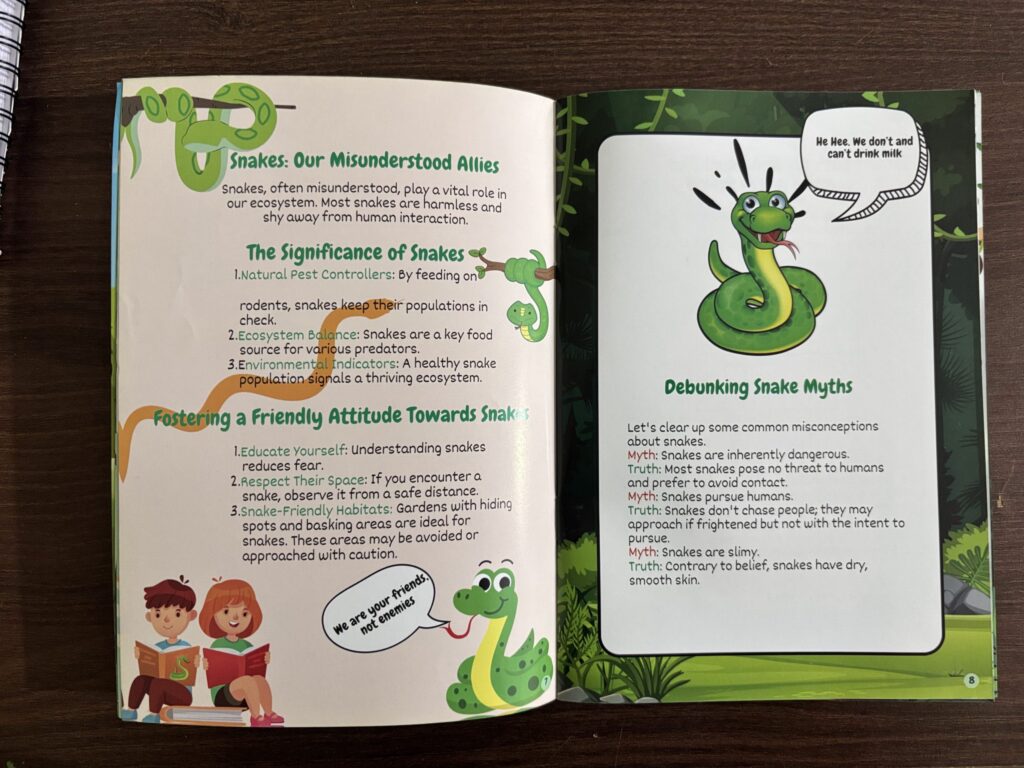
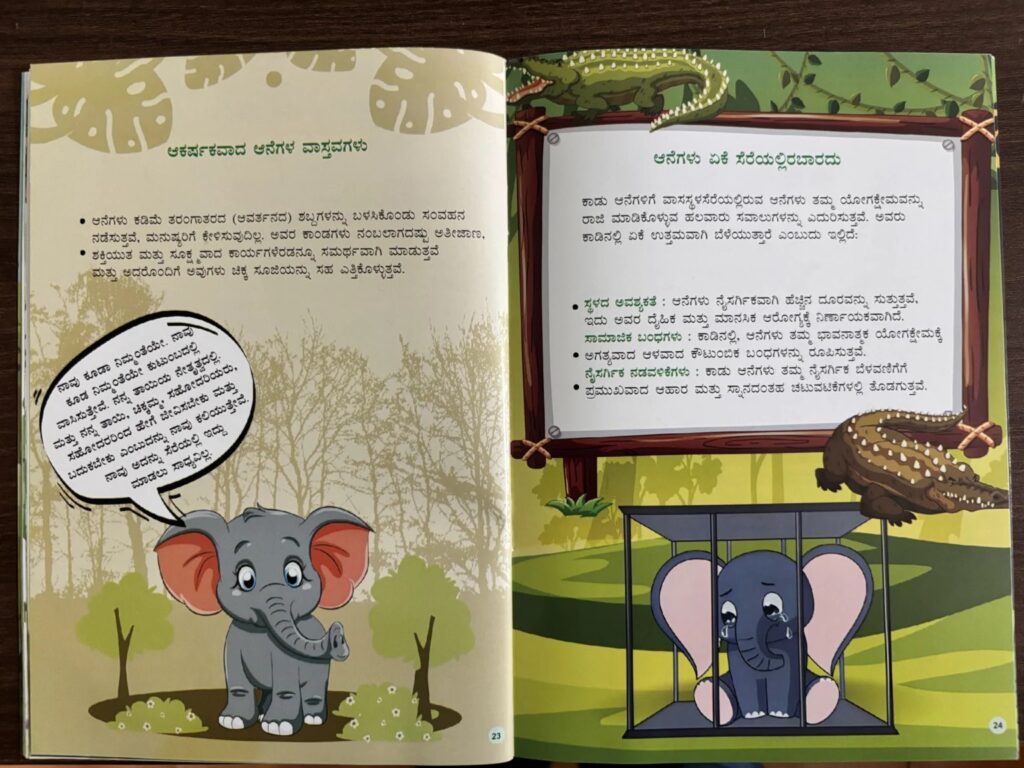
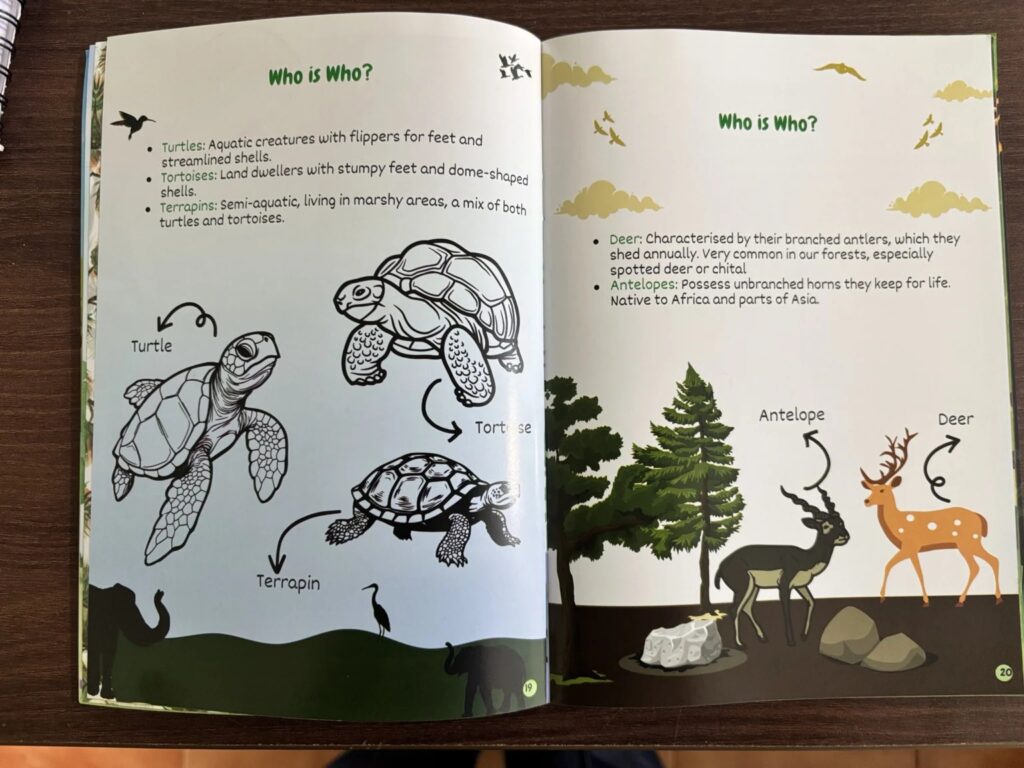
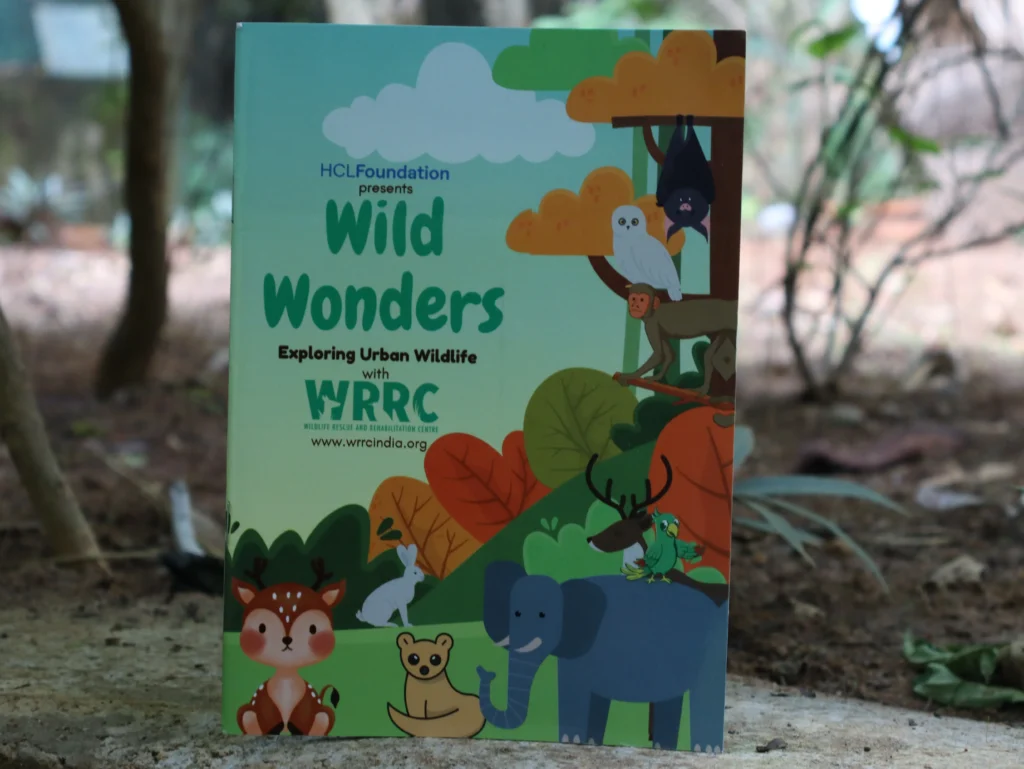
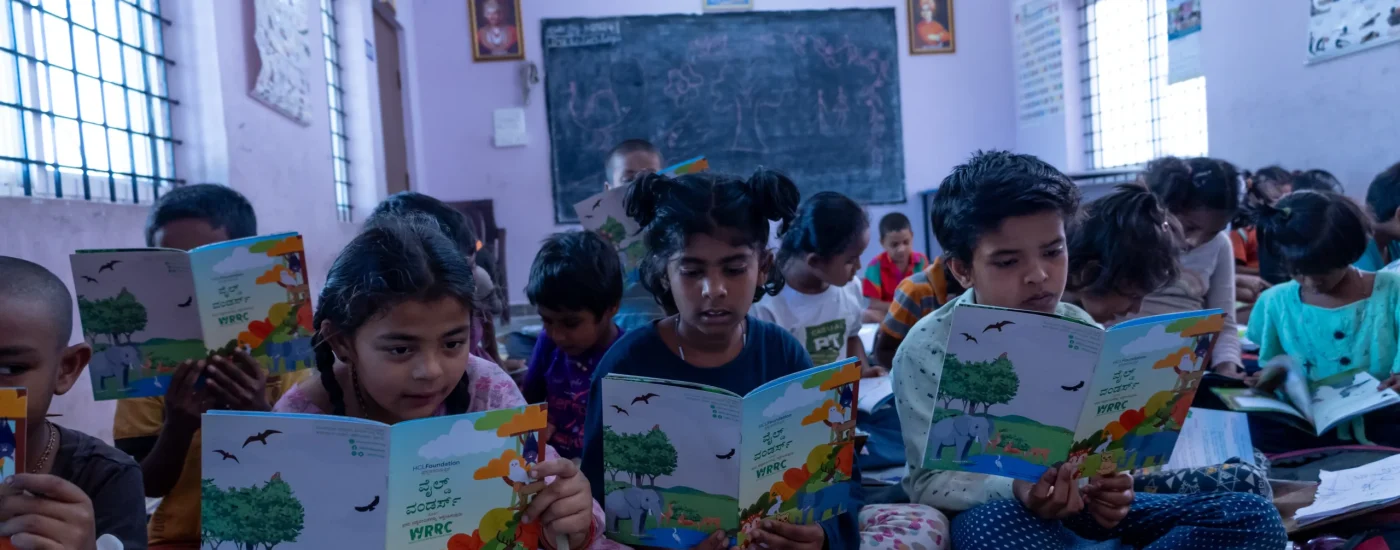
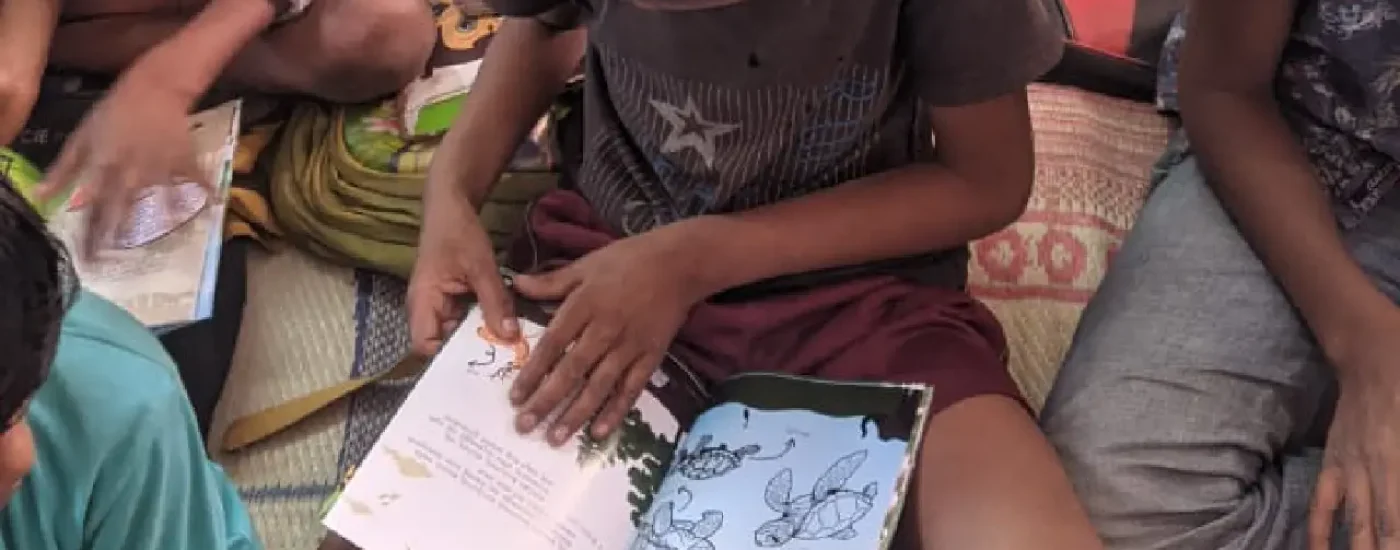
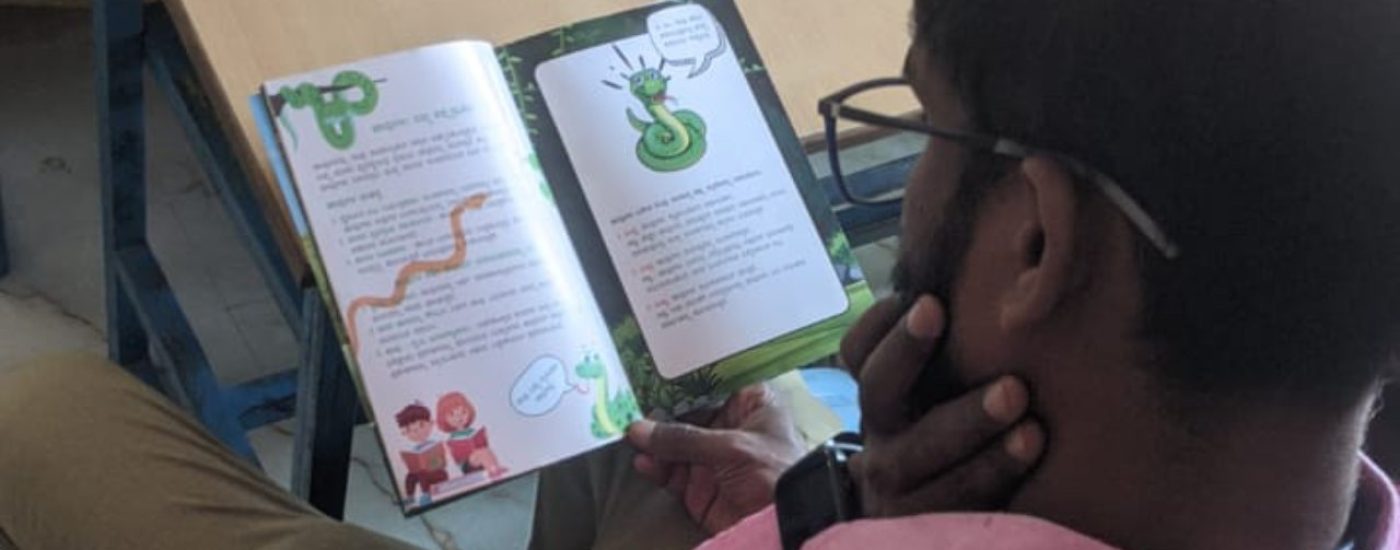
A book named “Wild Wonders: Exploring Urban Wildlife”, was then curated in both English and Kannada to bridge this gap .
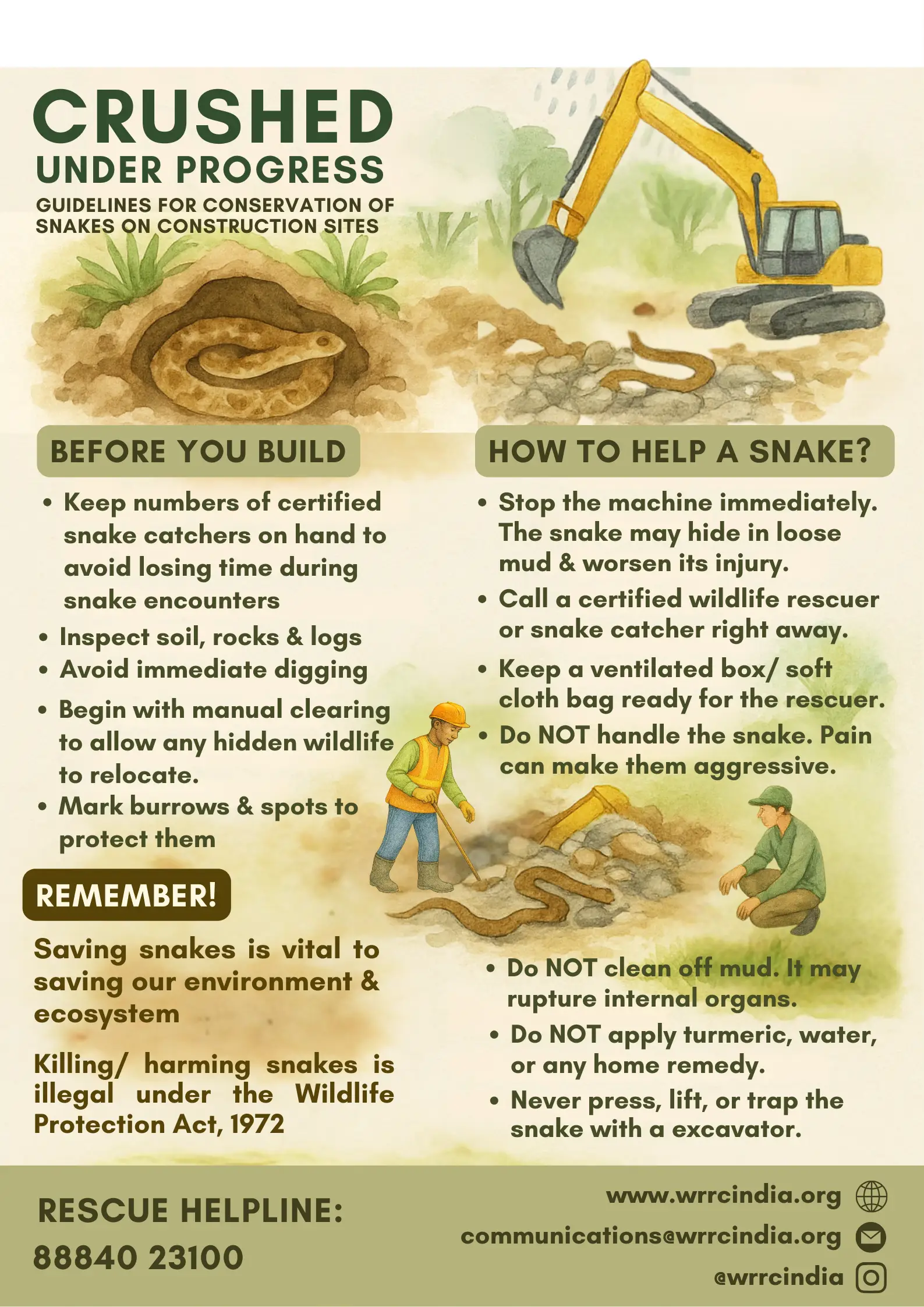
It clarifies what urban wildlife is and their essential role in ecosystems, such as pollination by birds and bees and tree planting by squirrels. The document offers guidance for harmonious living through tips like observing from afar, creating animal-friendly homes, and fostering wildlife-friendly gardens. It debunks common myths about snakes, emphasizing their role as pest controllers and environmental indicators, and encourages a positive attitude towards them. Additionally, it provides crucial “dos and don’ts” for snake bites and outlines safe practices for rescuing injured birds and other animals, highlighting the importance of professional help. Interactive activities like puzzles and “spot the difference” engage readers and reinforce learning about various species. The document also lists emergency contact numbers for wildlife rescue organizations, ensuring people know who to call for assistance. Ultimately, its goal is to educate the public, especially younger individuals, on the importance of urban wildlife and responsible interaction.
Support Animal Through Passive Adoption or Donation