Standard Urban Wildlife Rescue Protocol for Distressed Animals
Pointers for rescuing distressed urban wild life
This protocol from the Bannerghatta Rehabilitation Center outlines the steps to take when you encounter an injured, orphaned, or distressed urban wild animal.
- Contact a Rescue Team: Immediately inform a trained rescue team or local wildlife helpline. If help is delayed and the situation is critical, you may be guided through basic safe handling steps.
- Request Visual Confirmation: Before a rescue team arrives, they may ask you to send a photo or video of the animal. This helps them identify the species and age, assess its condition (injured, sick, or healthy), and plan the appropriate response.
- Do Not Feed or Give Water: If you find an injured animal, you should not feed it or give it water, especially by force. Improper feeding or hydration can lead to choking, aspiration, or death. It's best to wait for trained rescuers or rehabilitators to assess and provide care.
- Check for Orphaned or Juvenile Animals: Before assuming a young animal is orphaned, observe it from a distance for 30 to 60 minutes to see if its parents return. Many young animals, like squirrels or juvenile reptiles, may be learning to navigate on their own. If the parents are nearby, do not interfere.
- Secure the Animal Safely: For an injured animal, place it in a quiet, safe, and warm place. Use a well-ventilated cardboard box or pet carrier lined with a cloth or newspaper. Keep the box partially covered to reduce the animal's stress. Make sure to keep the box away from noise, people, and pets, especially dogs and cats.
Additional Information
- Handling: When handling the animal, gently cover it with a soft cloth to calm it and reduce movement. Hold it securely but gently. Place it in the prepared box and transport it quickly to a wildlife rescue center or veterinarian.
- Environment: While waiting for help, keep the animal indoors in a warm, dark space. Avoid loud talking, playing music, or allowing others to crowd around the animal.
CAUTION: Do not handle injured snakes, electrocuted or hurt monkeys, or other severely injured urban wildlife yourself. Please call a rescuer and stay and observe the animal from a safe distance.
Standard Bird Rescue Protocol for Distressed Birds
This protocol from the Bannerghatta Rehabilitation Center outlines the steps to take when you encounter an injured, orphaned, or distressed bird.
- Contact a Rescue Team: Immediately inform a trained rescue team or local wildlife helpline. If help is delayed and the situation is critical, you can be guided through basic safe handling steps. Do not delay handling in cases of visible bleeding, broken wings, or severe trauma.
- Request Visual Confirmation: Before a rescue team arrives, they may ask you to send a photo or video of the bird. This helps them identify the bird's species and age, assess its condition (injured, sick, or healthy), and plan the appropriate response.
- Do Not Feed or Give Water: If you find an injured bird, you should not feed it or give it water, especially by force. Improper feeding or hydration can lead to choking, aspiration, or death. It's best to wait for trained rescuers or rehabilitators to assess and provide care.
- Check for Orphaned vs. Fledgling Birds: Before assuming a chick is orphaned, observe the bird from a distance for 30 to 60 minutes to see if its parents return. Not every lonely chick is orphaned; fledglings often leave the nest to learn how to fly on the ground. If the parents are nearby, do not interfere.
- If Injured, Secure the Bird Safely: For an injured bird, place it in a quiet, safe, and warm place. Use a well-ventilated cardboard box or pet carrier lined with a cloth or newspaper. Keep the box partially covered to reduce the bird's stress. Make sure to keep the box away from noise, people, and pets, especially dogs and cats.
Additional Information
- Handling: When handling the bird, gently cover it with a soft cloth to calm it and reduce movement. Hold it securely but gently, keeping its wings close to its body. Place it in the prepared box and transport it quickly to a wildlife rescue center or veterinarian.
- Environment: While waiting for help, keep the bird indoors in a warm, dark space. Avoid loud talking, playing music, or allowing others to crowd around the bird.
CAUTION: Do not handle the birds if they are severely injured, snakes, wild birds, electrocuted or hurt monkeys, or other traumatic urban wildlife yourself. Please call a rescuer and stay and observe the animal from a safe distance.
Standard Protocol for Urban Snake Encounters
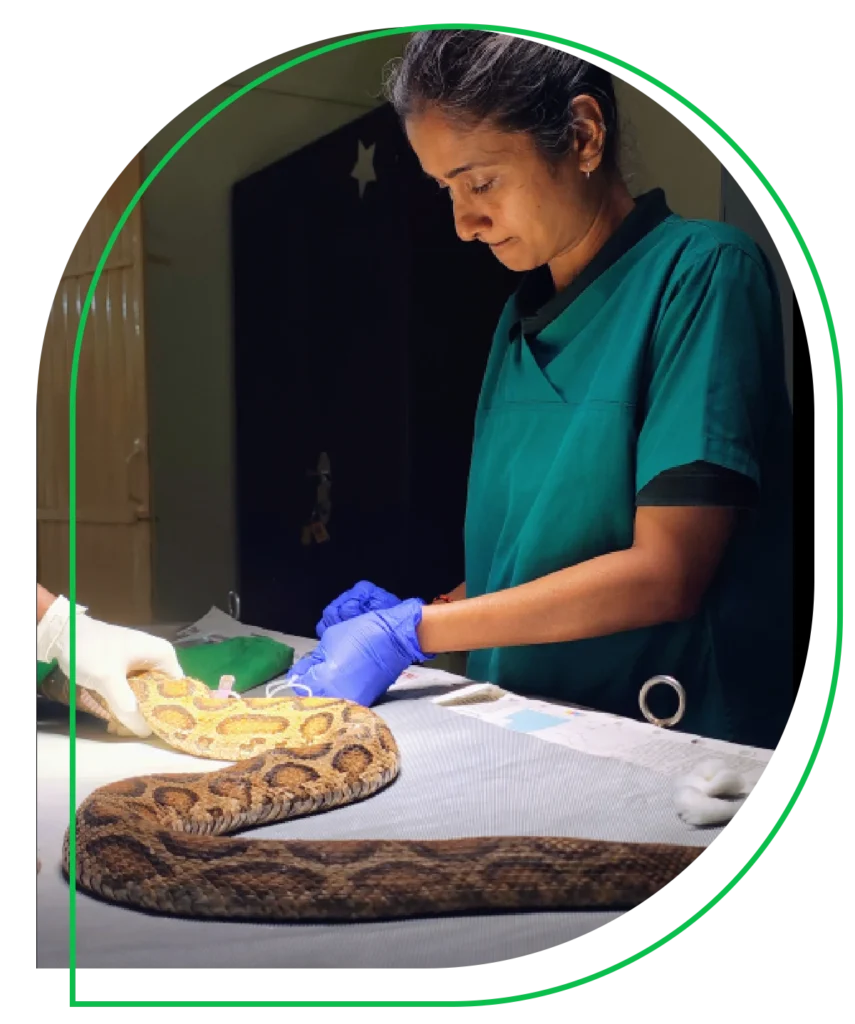
1. Maintain a Safe Distance
The most important rule: Do not approach, touch, or attempt to restrain the snake. Stay at least 5 to 10 feet away.
If the snake is moving, do not block its path. Most snakes will try to flee if given an exit.
Keep children and pets (especially curious dogs) far away from the area.
2. Constant Visual Monitoring
Snakes are masters of camouflage and can disappear into small crevices in seconds.
Do not lose sight of the snake. It is much harder for a rescuer to help if the animal cannot be found upon arrival.
If the snake is in a room, close the doors and gap the bottom with a damp towel to prevent it from escaping into the rest of the building.
3. Contact a Professional Immediately
Immediately call a certified snake rescuer, the forest department, or a local wildlife helpline.
Provide Visual Confirmation: If safe, take a photo from a distance. This allows the rescuer to identify if the snake is venomous (like a Cobra or Russell’s Viper) or non-venomous (like a Rat Snake), which determines their equipment and urgency.
4. Do Not Use Physical Barriers or Traps
Avoid Glue Traps: These cause immense suffering and skin tearing for snakes.
Avoid Nets: Unless you are a professional, using a net often results in the snake becoming entangled or defensive.
No Chemicals: Do not spray the snake with pesticides, bleach, or oils. This can blind the animal or cause respiratory distress.
5. Assess the Situation (Injured or Trapped)
If the snake is visibly injured (e.g., hit by a vehicle or attacked by a pet) or trapped in netting/fencing:
Do not attempt to free it. A panicked, injured snake is highly likely to strike.
Wait for the rescue team. They have the specialized tools (hooks, tongs, and tubes) to handle the animal without causing further injury to the snake or themselves.
CAUTION: CRITICAL SAFETY RULES
Never handle a snake yourself, even if it appears dead. Some species play dead as a defense mechanism, and even a recently deceased snake can have a reflexive bite.
Identify, don't agitate. Do not poke the snake with sticks or throw objects at it to make it move.
Residential Entry: If a snake enters a vehicle or an appliance, do not turn the machine on. Call for professional assistance immediately.
Standard Urban Wildlife Rescue Protocol for Distressed Animals
This protocol from the Bannerghatta Rehabilitation Center outlines the steps to take when you encounter an injured, orphaned, or distressed urban wild animal.
Contact a Rescue Team
Immediately inform a trained rescue team or local wildlife helpline. If help is delayed and the situation is critical, you may be guided through basic safe handling steps.
Request Visual Confirmation
Before a rescue team arrives, they may ask you to send a photo or video of the animal. This helps them identify the species and age, assess its condition (injured, sick, or healthy), and plan the appropriate response.
Do Not Feed or Give Water
If you find an injured animal, you should not feed it or give it water, especially by force. Improper feeding or hydration can lead to choking, aspiration, or death. It's best to wait for trained rescuers or rehabilitators to assess and provide care.
Check for Orphaned or Juvenile Animals
Before assuming a young animal is orphaned, observe it from a distance for 30 to 60 minutes to see if its parents return. Many young animals, like squirrels or juvenile reptiles, may be learning to navigate on their own. If the parents are nearby, do not interfere.
Secure the Animal Safely
For an injured animal, place it in a quiet, safe, and warm place. Use a well-ventilated cardboard box or pet carrier lined with a cloth or newspaper. Keep the box partially covered to reduce the animal's stress. Make sure to keep the box away from noise, people, and pets, especially dogs and cats.
Additional Information
Handling: When handling the animal, gently cover it with a soft cloth to calm it and reduce movement. Hold it securely but gently. Place it in the prepared box and transport it quickly to a wildlife rescue center or veterinarian.
Environment: While waiting for help, keep the animal indoors in a warm, dark space. Avoid loud talking, playing music, or allowing others to crowd around the animal.
CAUTION:
Do not handle injured snakes, electrocuted or hurt monkeys or other severely injured urban wildlife yourself. Please call a rescuer and stay and observe the animal from a safe distance.