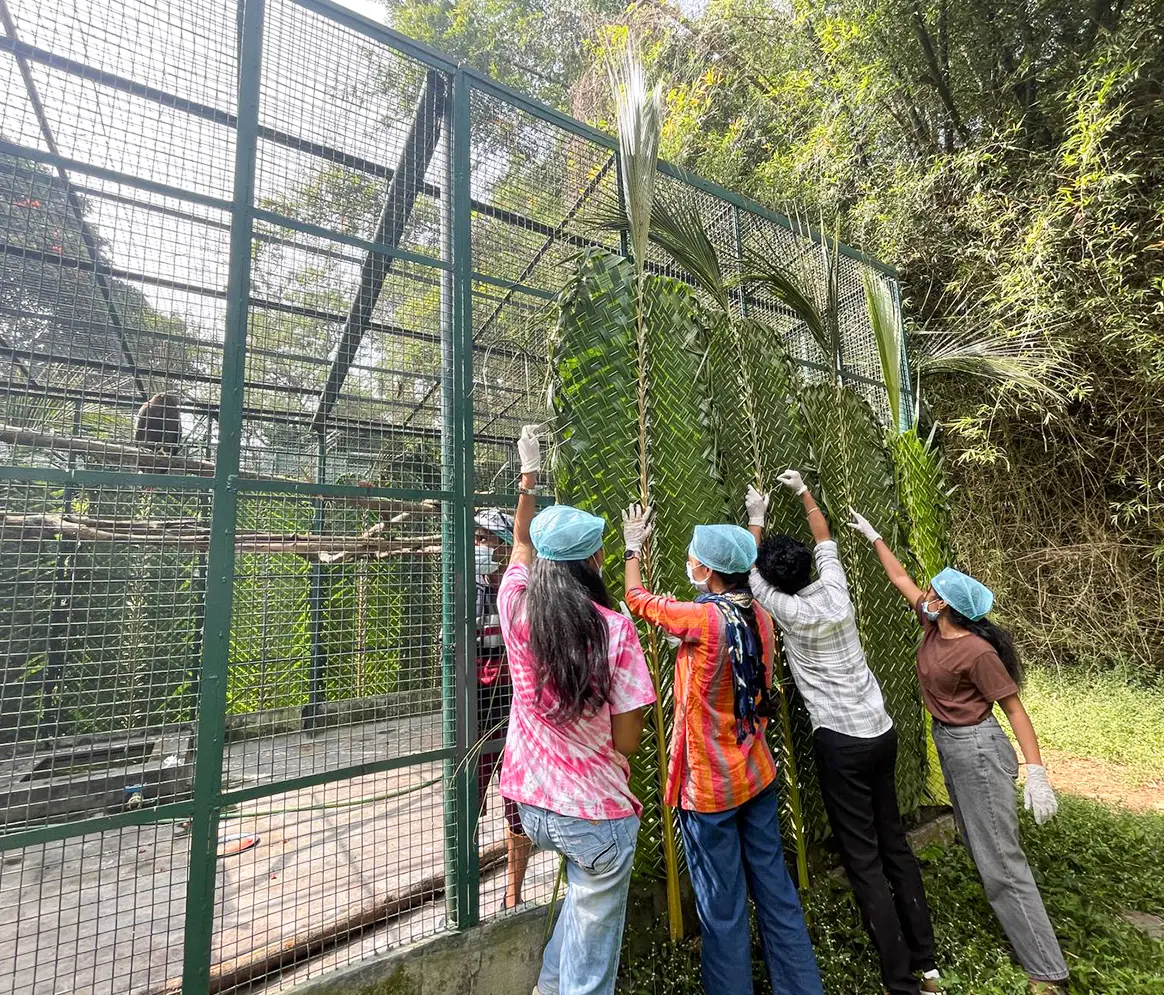
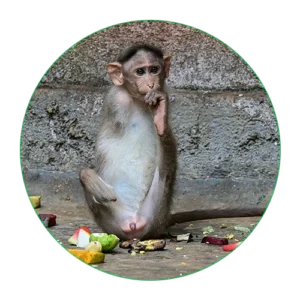
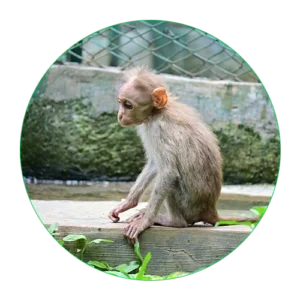
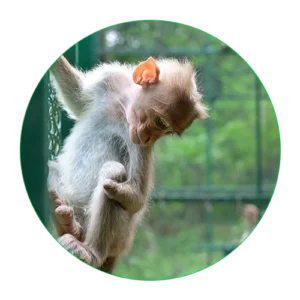
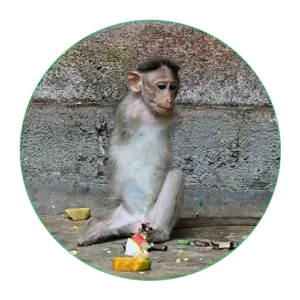
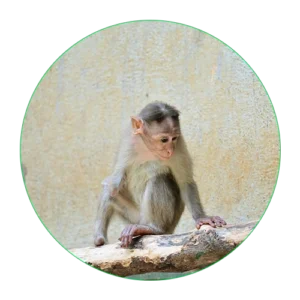
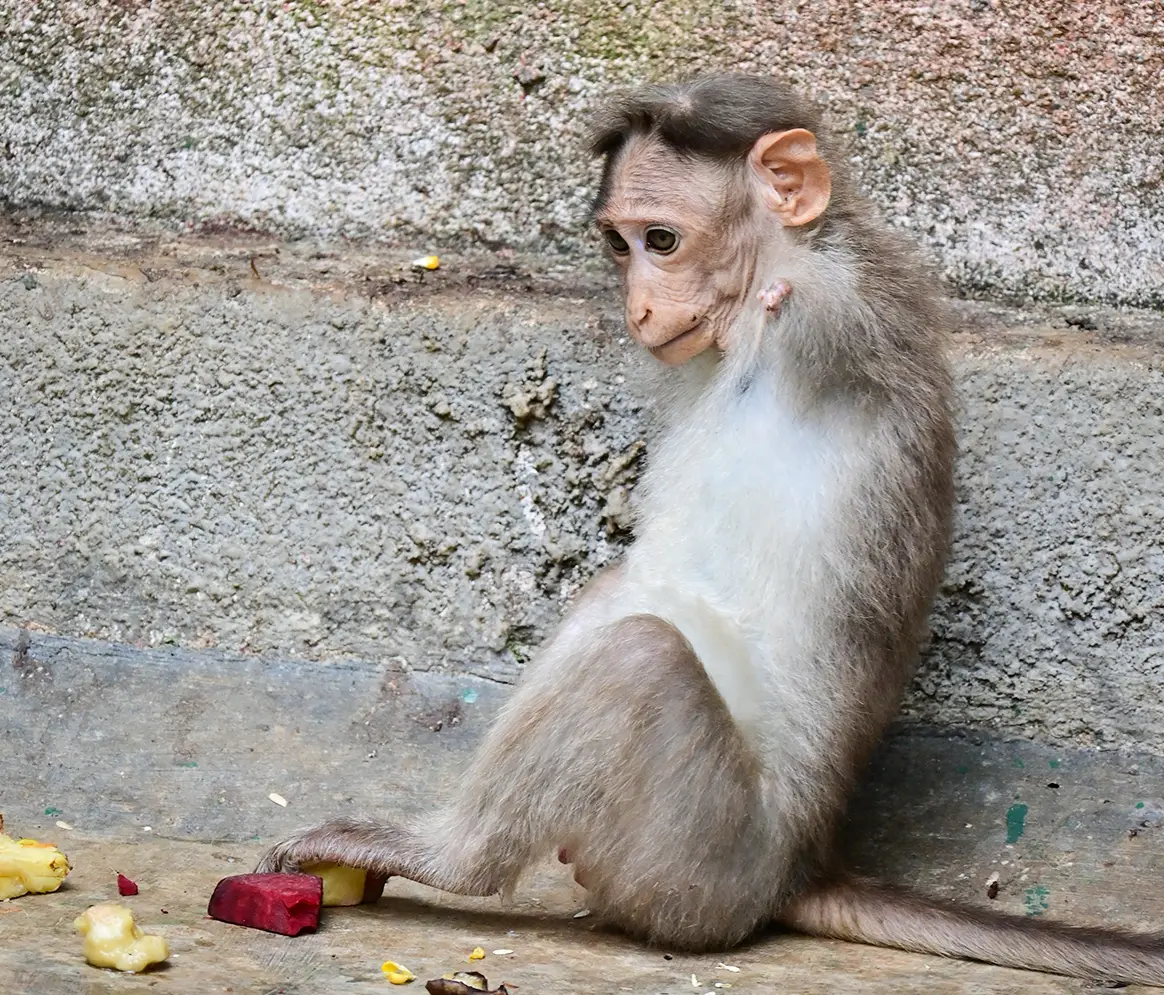
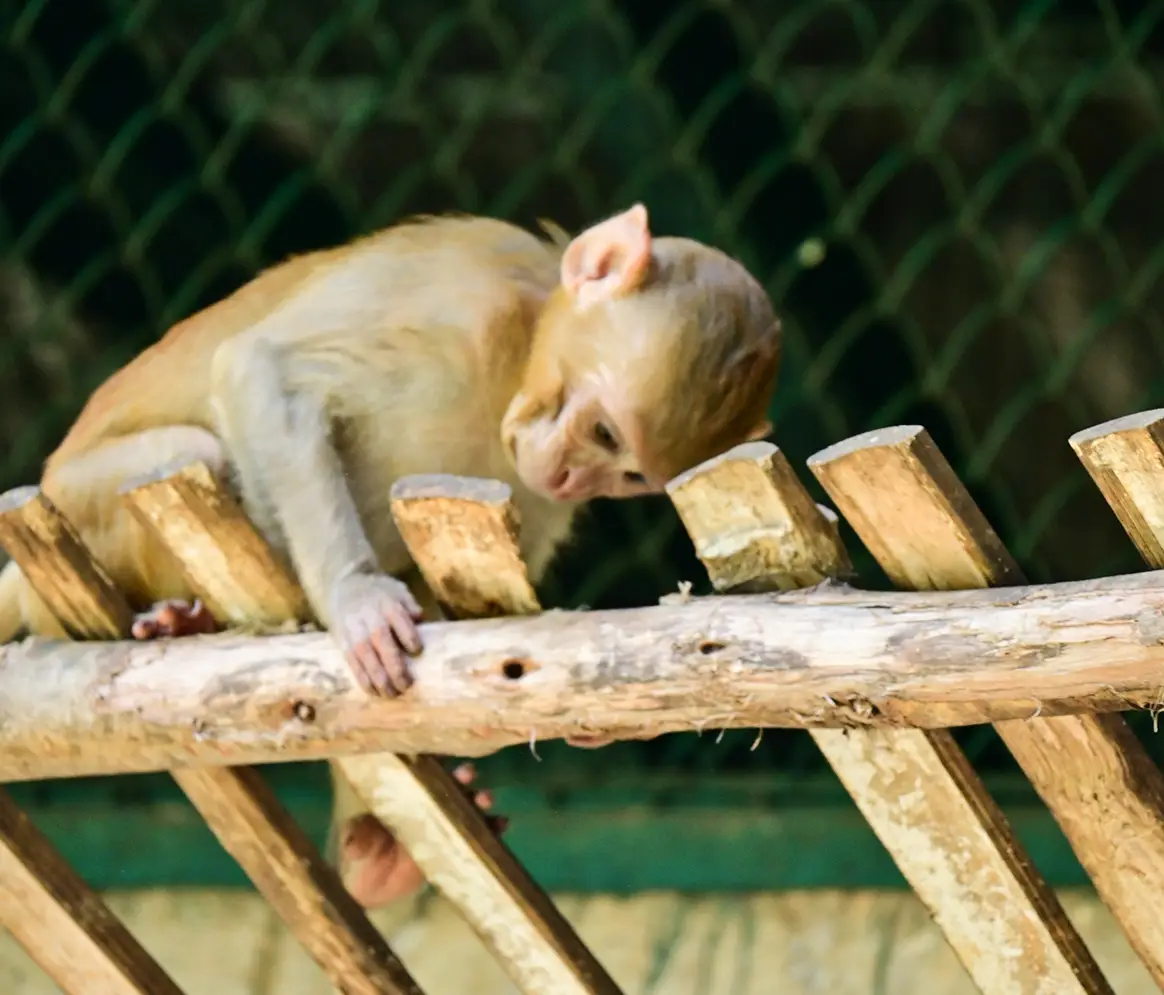
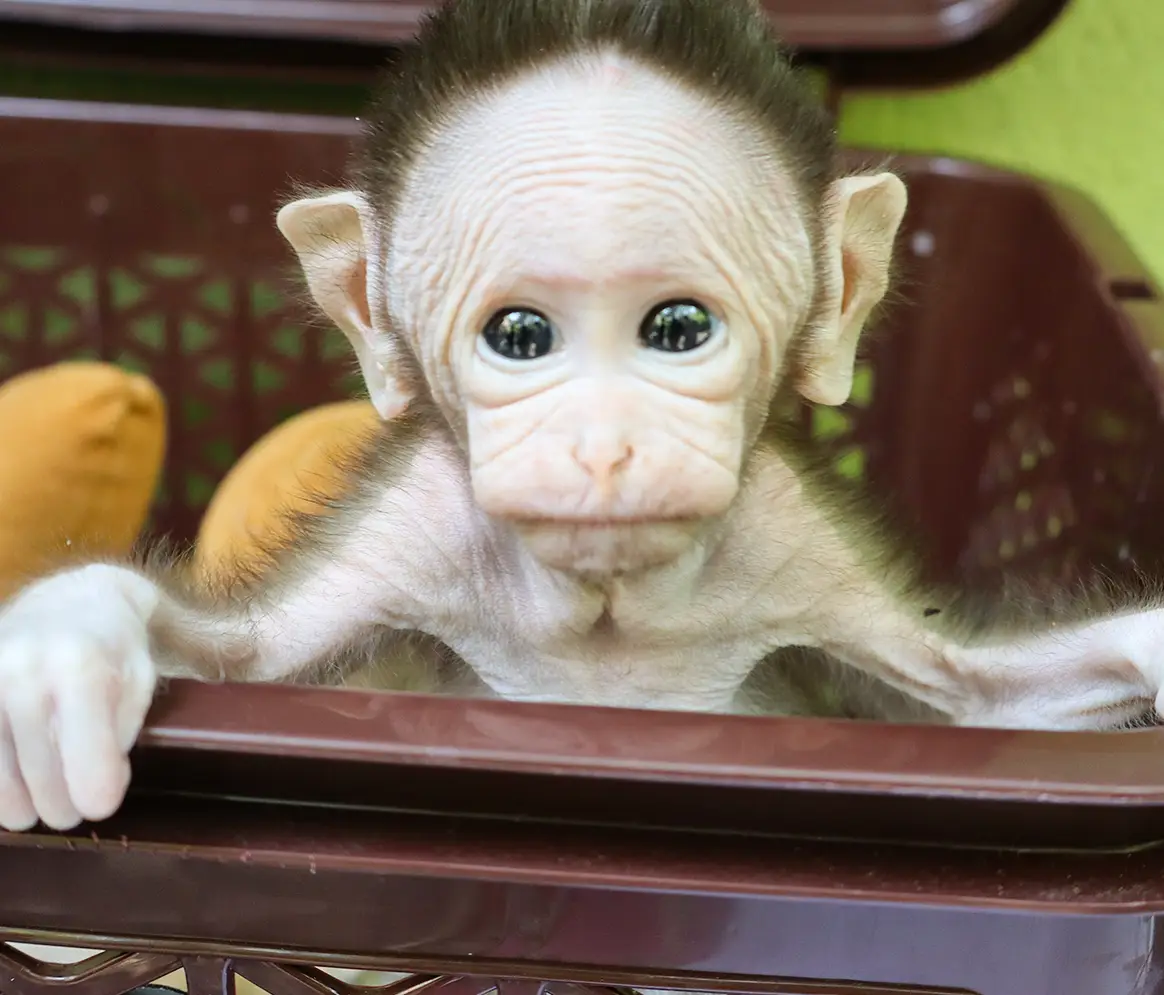
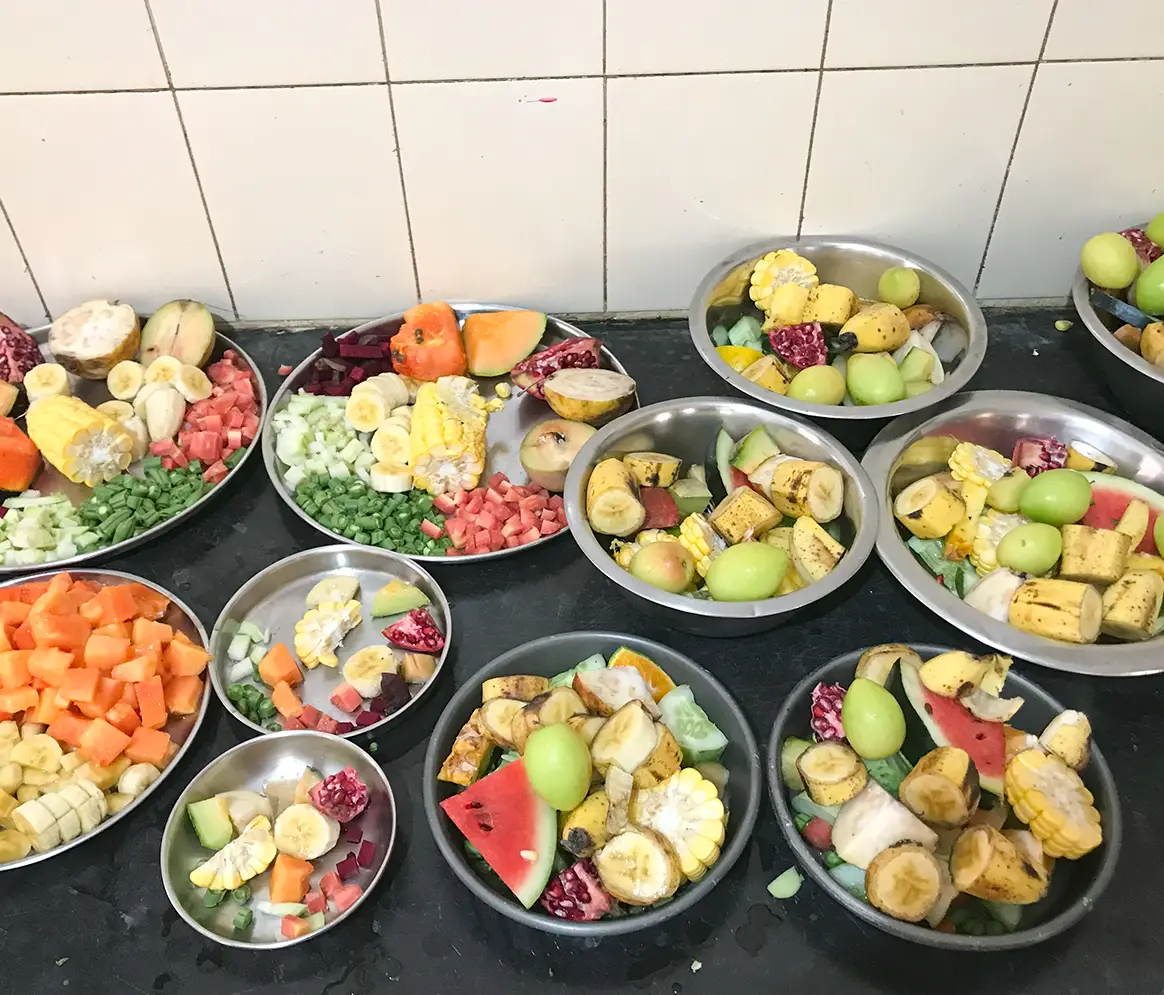
Maya, a young female Bonnet macaque a busy place of urban Bengaluru. She had been kept as a pet, which likely contributed to her initially being very active, curious, and playful, yet completely unaware of her true identity as a monkey. Upon arrival, she was found to have an oral deformity and was kept under quarantine to ensure her health and to begin the crucial process of integrating her into a natural macaque social structure. Despite her unique background, her appetite for fruits and vegetables was good. After a month of observation, she was moved to a larger enclosure with other young macaques. The goal was to help her learn the natural behaviours and social dynamics of a Bonnet macaque troupe. Interestingly, Maya has since become quite assertive within the group, often displaying a “pesky” and active demeanour, even to the point of bullying newer macaques. This newfound assertiveness highlights her adaptation to a more natural social hierarchy, albeit with some challenging behaviors .Passively adopt and aid Maya enabling her back to the wilderness.
Tridev, a young male Bonnet macaque from a busy street of Bengaluru with severe electrocution burns. He presented with affected limbs, a foul odour, and singed hair across his body, indicating a high-voltage electrical shock sustained while attempting to cross the road via electric wires. Despite a grim prognosis, treatment with antibiotics, painkillers, and anti-burn ointments began immediately. His appetite improved significantly with effective pain management. However, the electric current caused complete necrosis in three of his limbs—both forelimbs and his right hindlimb—necessitating amputation. This left him with only his left forelimb intact, ruling out his release back to his natural habitat. Tridev will now reside at BRC for lifelong care. Despite his profound handicap, his spirit remains undimmed; he displays remarkable determination and grit, proving himself agile, mobile, and happy. Once his wounds healed, he was moved to a larger enclosure equipped with platforms, swings, and branches to encourage movement and play, alongside other young macaques for companionship. Tridev thrives in this environment, energetically navigating the space and often engaging in playful “bullying” with other macaques. He has a remarkable ability to help and heal, often guiding other macaques back to their natural behaviors. Passiveey support Tridev and similar traumatized specially abled mokeys.
Kali, a young female Bonnet macaque, was rescued from a rural area , outskirts of Bengaluru , suffering from severe burn wounds across her buttocks, anal region, hind limbs, and forelimbs, suspected to be from electrocution. Upon arrival at WRRC, she was weak, dehydrated, and weighed only 1 kg. Immediate treatment commenced with antibiotics, painkillers, fluids, and topical burn creams, leading to a gradual and remarkable recovery. Presently, all her wounds has completely healed, except for miner health issues.
Passively aid kali back to the spirited monkey she was, due course plan – rehabilitating back to the place when she was rescued from.
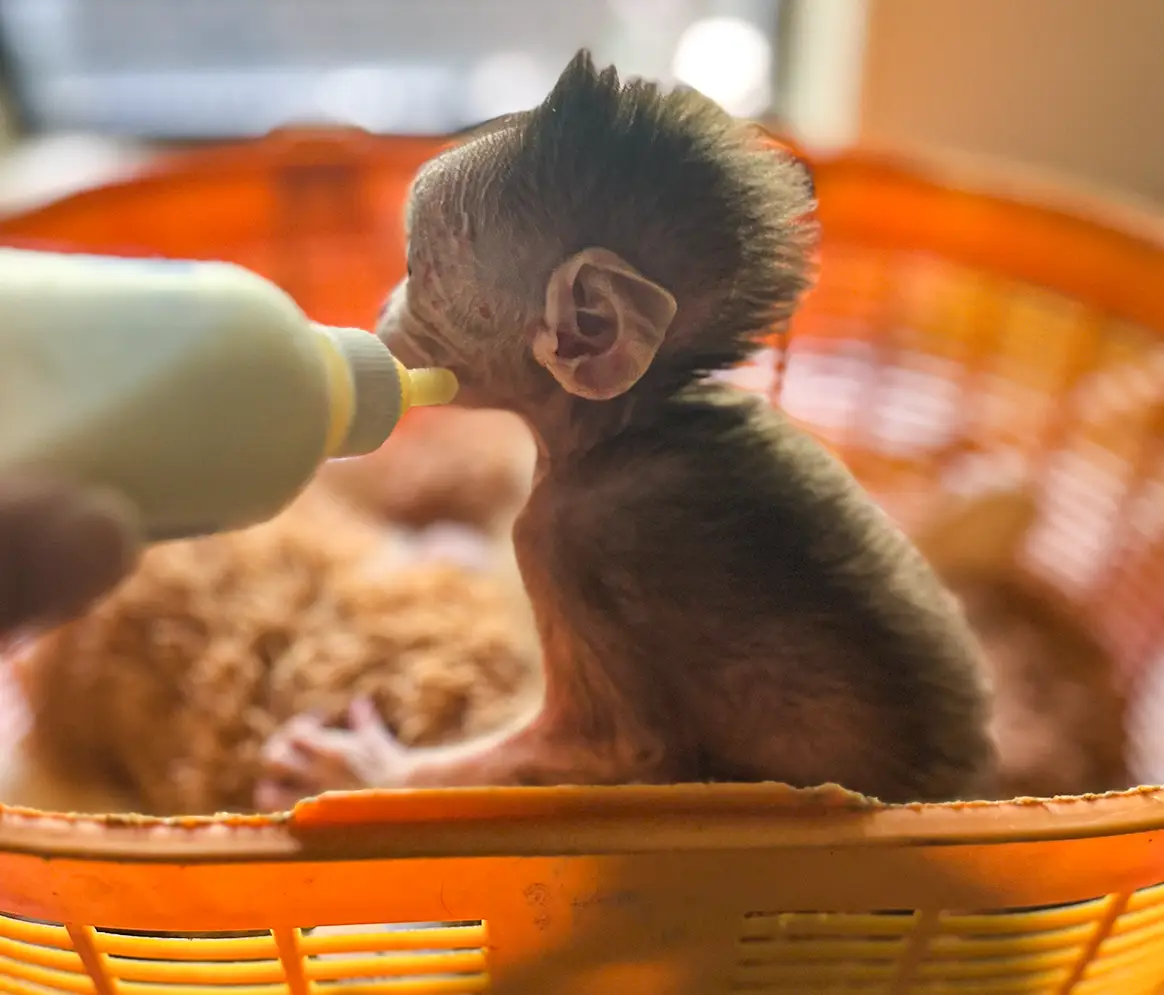
Parvati: a tiny Bonnet Macaque, was rescued from Market area of bengaluru . She was a pet in a local home, and though her exact history is unclear, it was reported her mother had died. Barely weeks old, the infant, Parvati, required meticulous hand-rearing at the Wildlife Rescue and Rehabilitation Centre (WRRC). This involved feeding her freshly reconstituted powder milk with sterilized bottles, taking extreme care due to her lack of passive immunity from her mother’s milk.By three months, Parvati was successfully weaned onto solid foods like fruits and vegetables and slowly introduced to other macaques for socialization. However, a male macaque from an adjoining enclosure severely bit her left hand. The tiny, frightened Parvati was rushed into surgery, having lost a significant amount of blood. Despite the grim outlook, Parvati proved to be a fighter and survived, though her left forelimb paw had to be amputated due to severe damage.Parvati’s journey of resilience continues at WRRC. We are currently seeking passive adopters to help cover the costs of her ongoing care, rehabilitation, and ensuring her continued well-being. Your passive adoption will enable her chance at a healthy, fulfilling life.
Bubli: A young female Bonnet Macaque was rescued from bengaluru urban suffering from severe electrocution burns, losing her left hand and right leg. Despite these injuries, she was called Bubli and her remarkable recovery at the Wildlife Rescue and Rehabilitation Centre (WRRC) was astonishing
Bubli is now in a larger enclosure with other young macaques like Tridev, Maya, and Parvati. As highly social animals, this interaction helps them cope with their losses and develop crucial social bonds through grooming and play. Bubli, being a wild rescue, will be a valuable teacher to the other macaques, many of whom were previously pets, helping them learn natural behaviors like showing submission and friendliness within a troupe.WRRC is currently seeking passive adopters for Bubli. Your support will ensure she continues to receive the specialized care needed for her rehabilitation and well-being as she thrives and helps her peers learn essential wild behaviors.
Manchali: A young female Bonnet macaque arural area of Bengaluru. This young monkey along with her mother had been badly electrocuted with singed hair, limbs with burnt wounds and poor dehydrated body condition. Both were immediately treated for all their injuries and made as comfortable as possible. The young female was named Manchali and her mother was named Meena. Both had extensive internal and external injuries. However their recovery was steady and both were shifted into a larger enclosure with platform, so that they could be together again after being housed separately in adjoining squeeze cages for their prolonged treatment. The mother, Meena, also needed physiotherapy daily since her limbs had stiffened and she was unable to walk or get up. Both the mother and daughter were overjoyed to be together again, cuddling and feeding each other. But Meena’s wounds were severe and passed away. So Manchali was integrated with the other young macaques Tridev, Bubli, Parvati, Meena, Chandini, Kali. Manchali has lost her right forelimb and right hindlimb and hence cannot be released back into the wild. She will live with her new friends at BRC under lifetime care. Your passive adoption will enable her chance at a healthy, fulfilling life.
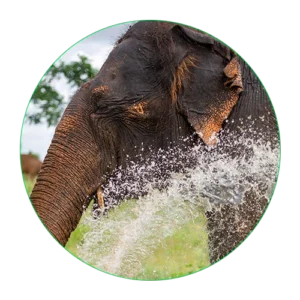
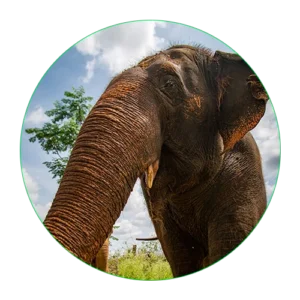
Lucky- An endearing elephant tale of lucky who experienced a significant positive transformation under the care of WRRC. Here, she is provided with specialized attention tailored to her unique needs. Our dedicated team ensures she receives appropriate veterinary care for her leg and overall well-being. Notably, Lucky has a wonderful appetite and thoroughly enjoys her meals. Under the supportive environment she moves freely within a safe space, with access to a nutritious diet she clearly appreciates, and benefits immensely from being an integral part of the herd, displaying an extremely social nature with her fellow elephants, which is crucial for her social and emotional enrichment. Our focus extends beyond simply addressing her physical ailments to fostering an environment where she can feel secure, comfortable, and ultimately thrive, embracing both her meals and her interactions with the other elephants, despite the challenges she has faced.
This gentle elephant revealed herself to be a kind and inquisitive soul despite her difficult past, she displayed a calm and friendly disposition, readily showing trust in her new caregivers.
The curiosity about her new surroundings was unmistakable. She explored her new habitat with keen interest, a stark contrast to the confined and unnatural existence she previously endured. Jalebi’s rescue and rehabilitation at the ECF underscore the critical importance of ethical treatment and conservation efforts for elephants and other wildlife.
Her story poignantly illustrates the resilience inherent in nature and the transformative power of compassionate care.
Her willingness to interact and her gentle nature quickly endeared her to the ECF staff, making her rehabilitation journey a joyful and fulfilling experience for all involved. The staff dedicated themselves to her well-being, providing not only the necessary physical care but also the emotional support to aid her adjustment and healing.
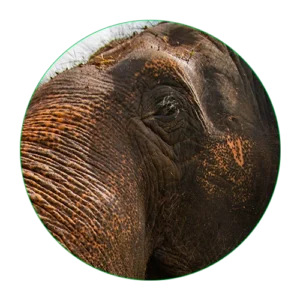
Devi endured severe deprivation in a small, enclosed area within a busy part of the city, a stark difference from the vast, natural environments elephants need. It was clear that her physical and mental health had severely declined due to her previous living conditions.
She suffered from numerous nutritional deficiencies because her inadequate diet didn’t meet the complex dietary requirements of elephants, which involve a large amount and variety of plants. Additionally, being confined on a hard, unnatural surface caused painful foot abscesses, a common and serious condition in elephants that can lead to significant mobility problems and even death if not treated.
This absence of care highlighted the cruelty of her captivity, showing a serious disregard for her well-being and the fundamental needs of her species. it was a vital step towards restoring her health and introducing her to an environment that mimics the conditions she should have always had – natural ground for walking, dust and mud for bathing, and the simple yet important experiences of rain and sunlight. For Devi, the rescue was the initial step in her healing journey, allowing her to learn to be an elephant among other elephants, free from the walls that had once defined her existence.