
ELEPHANT CARE FACILITY( ECF)
Elephant Care Facility (ECF)
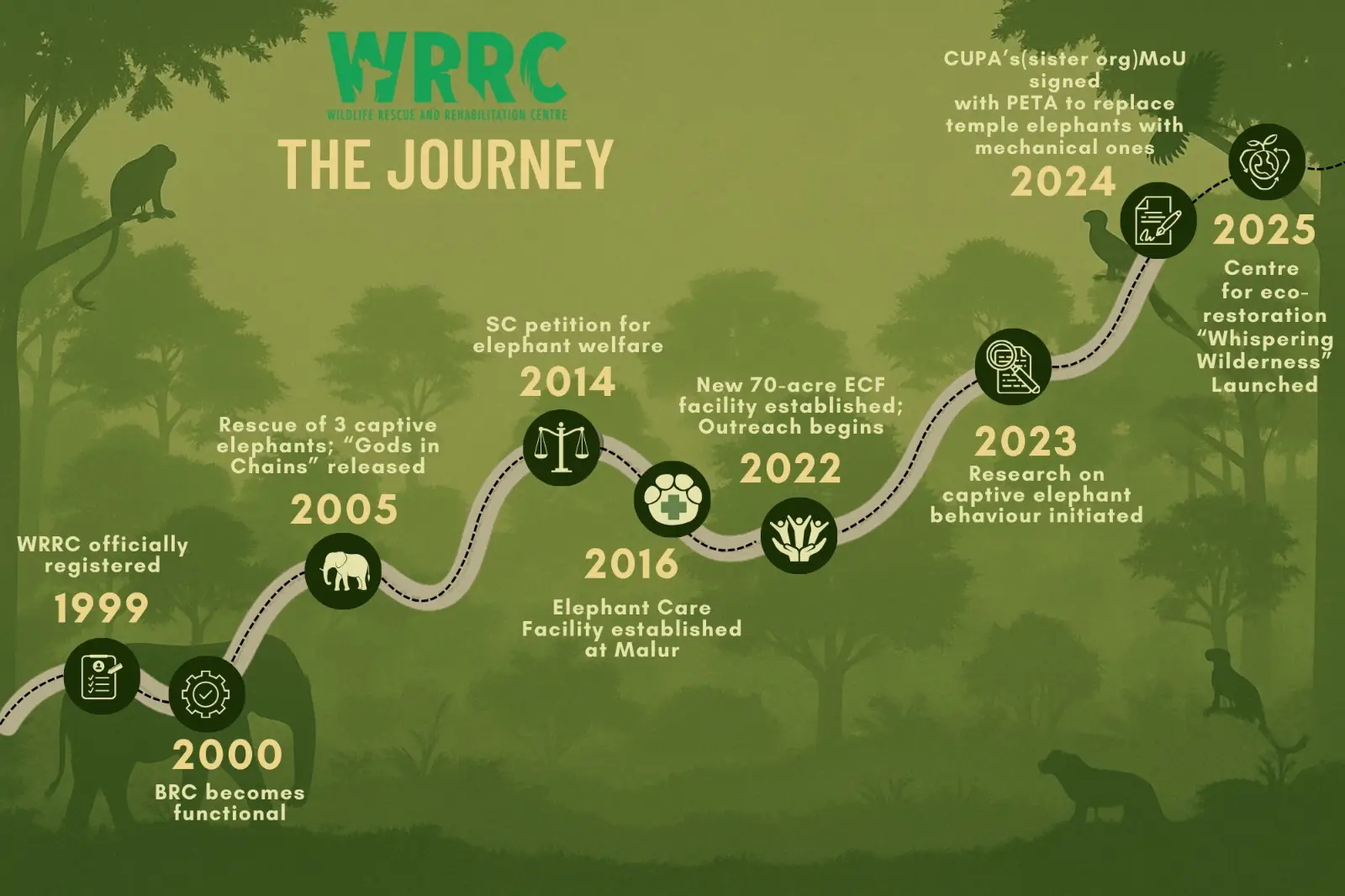
WRRC’s Elephant Care Facility is Karnataka’s first dedicated institution for the long-term treatment and rehabilitation of rescued elephants. The Centre generally operates with the generous support of the Government of Karnataka. ECF provides a peaceful and nurturing environment for elephants, each with a unique story of survival and resilience, all while strengthening its role as a leading advocate for captive elephants in India by 2016. As of 2022, WRRC collaborated with the Karnataka Forest Department and relocated to a new facility, ensuring that the elephants have the necessary space to thrive.
Elephants here are rescued from harsh conditions, including neglect, physical ailments, and captivity. They receive individualized care including a nutritious daily diet of fresh grass, fruits, and vegetables, regular veterinary check-ups, and full-time attention from trained mahouts and managers.
A vital step is taken here in managing conditions like arthritis, abscesses, and infections common in rescued elephants. Each elephant at ECF is treated not just as a rescue, but as an animal with space to explore, heal, and live with the dignity that they deserve, setting a benchmark for ethical elephant care in India.
HOW ECF WAS FORMED
The history of the Elephant Care Facility (ECF) began with a much smaller and more personal initiative. The first rescue center was established on a small 2-acre fruit orchard that was generously donated by a well-wisher. It was intended to be a safe haven for just one elephant.
However, as the elephant family grew through further rescues, it became clear that a much larger space was needed to provide the animals with the freedom and care they required. This pressing need for expansion led to a formal collaboration between the Wildlife Rescue and Rehabilitation Centre (WRRC) and the Karnataka Forest Department (KFD) in 2022. This partnership resulted in the establishment of the current 50-acre ECF in the Lakshmisagar Reserve Forest, which serves as a large-scale sanctuary for a growing number of elephants.

EMERGENCE OF ELEPHANT CARE FACILITY
The emergence of the Wildlife Rescue and Rehabilitation Centre (WRRC)'s Elephant Care Facility (ECF) is a direct response to the widespread and systemic issue of captive elephant abuse in India. The facility was established to provide a solution to the cruel conditions and lack of proper care for elephants that have been subjected to decades of exploitation.
The ECF's existence is an illustration of the problems plaguing captive elephants in India. These problems include:
- Forced Labor and Exploitation: Elephants have been used for heavy physical work, such as logging. Their immense strength was exploited, often with little regard for their well-being.
- Deplorable Living Conditions: Captive elephants are often kept in extremely confined and unnatural environments, a severe contrast to their wild behavior of roaming for miles. They are frequently housed on hard surfaces like concrete, which leads to chronic and painful conditions like arthritis, foot cracks, and deformities.
- Inadequate Care: In private ownership, elephants often suffer from a lack of proper care. Their diets are often unsuitable, and they are not provided with the medical attention or exercise they need. This leads to a host of health problems, from obesity, arthritis, sepsis to malnutrition.
Lack of Suitable Alternatives: A major reason for the ECF's creation was the absence of a safe and humane alternative for these rescued elephants,lack in the resources and expertise to manage and rehabilitate a large number of captively abused elephants. This created a critical need for a dedicated, scientifically managed facility
VISION OF ECF
The vision of the Elephant Care Facility is to set a new standard for ethical elephant management and conservation in India. The core tenets of this vision are:
- To provide a sanctuary that offers a natural and healthy environment, with specialized veterinary care, for all rescued elephants.
- To serve as a model for ethical wildlife conservation, demonstrating the importance of collaboration between government bodies, non-profit organizations, and the community.
- To give rescued elephants the dignity, respect, and freedom they deserve, allowing them to live out their lives without fear or pain.
MILESTONE MOMENTS
Since its inception, the ECF has achieved significant milestones in elephant welfare and rehabilitation, highlighted by several success stories and the development of advanced facilities:
- Advanced Medical Facilities: A major achievement has been the construction of medical infrastructure to provide the highest standard of care. This includes a dedicated hydrotherapy pool, which is crucial for treating elephants with arthritis and foot ailments, X-ray and laser therapy machine to accurately diagnose and treat a wide range of injuries and conditions.
- Social and Behavioural Healing: Beyond physical recovery, a key success has been the noticeable improvement in the elephants' emotional and social well-being. They have become more socialized, their stress levels have reduced, and they have begun to form herds, showcasing the positive impact of a safe and natural environment.
- Captive Elephant Behaviour Research: For the last two years, ECF has been conducting extensive research on the behaviour of captive elephants, gathering valuable scientific data to the field of elephant welfare.
- Knowledge Partner for Human-Elephant Conflict Mitigation: The Karnataka Forest Department (KFD) recognized WRRC as one of the knowledge partners for an international conference on human-elephant conflict mitigation held in 2024, highlighting the organization’s expertise in the field.
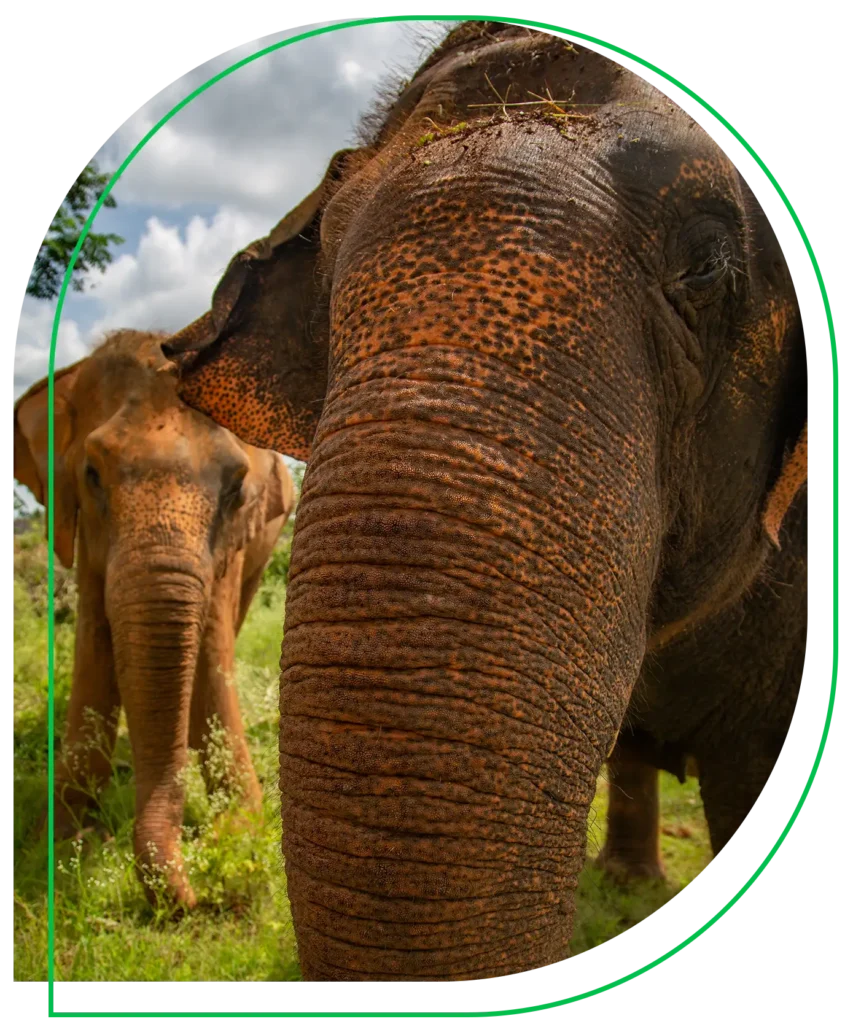
Elephant Care Facility at Narsapura
Our Elephant Care Facility (ECF) in Narsapura is a sanctuary for rescued elephants, providing them with safe spaces, nutritious food, and medical care. Here, we offer these magnificent animals the chance to live a life free from exploitation and abuse, surrounded by love and respect.

Rehabilitation
Medical care and therapy

Skilled Caretakers
Trained handlers and veterinarians

Natural Enclosures
Open spaces for roaming
Elephant Care Facility (ECF) at Narsapura provides specialised veterinary medical care to elephants rescued from long-term captivity and distressing conditions. Many elephants admitted to the facility suffer from chronic and degenerative health issues resulting from prolonged chaining, overwork, poor nutrition, and lack of veterinary attention.
Medical interventions at the ECF include:
• Diagnosis and treatment of chronic foot ailments, abscesses, nail cracks, and infections common in captive elephants
• Management of musculoskeletal disorders, including arthritis, joint degeneration, and mobility impairments
• Wound care and treatment of injuries, both acute and long-standing
• Treatment of skin conditions, parasitic infections, and systemic illnesses
• Geriatric care for ageing elephants, including pain management and supportive therapies
• Nutritional and dietary management prescribed as part of medical recovery
• Regular health monitoring, blood work, and veterinary assessments
• Care includes tailored diets, medicines, wound care, specialised therapies such as hydrotherapy, and activities to support physical and psychological recovery.
The objective of medical intervention at the ECF is to alleviate suffering, restore health where possible, and ensure long-term clinical management for elephants who cannot be returned to the wild.
The Elephant Care Facility (ECF) is designed to deliver specialised, skilled veterinary healthcare tailored to the complex medical needs of elephants rescued from prolonged captivity and adverse conditions. Elephants under previous captivity often present with multi-system health issues that require expert clinical assessment, long-term treatment planning, and continuous monitoring.
Medical care at the ECF is provided by trained wildlife veterinarians with experience in elephant medicine, supported by skilled animal care staff. Clinical interventions include comprehensive diagnostic evaluations, condition-specific treatment protocols, and evidence-based pain management. Particular emphasis is placed on the treatment of chronic foot disorders, musculoskeletal degeneration, arthritis, and mobility impairments, which are prevalent among elephants subjected to years of confinement and unnatural substrates.
The facility also delivers advanced wound management, infection control, dermatological care, parasite management, and treatment of internal ailments. Geriatric and palliative care is a key component of the medical programme, addressing age-related degeneration, chronic pain, and reduced immunity through supportive therapies and monitored medication regimes. Nutritional plans are medically prescribed to correct deficiencies and support recovery.
All medical care is administered following welfare-centred, non-exploitative practices, prioritising minimal stress handling, regular health assessments, and long-term clinical oversight. The ECF functions as a specialised medical environment rather than a holding centre, ensuring that elephants receive continuous, skilled healthcare aligned with accepted veterinary and conservation standards.
Elephant Care Facility (ECF) is designed to provide elephants with access to large, naturalistic spaces that allow for free movement, choice, and autonomy—conditions essential for psychological recovery following years of captivity. ECF prioritises open landscapes, natural substrates, shade, water bodies, and vegetation, enabling elephants to engage in instinctive behaviours.
Access to natural spaces allows elephants to walk long distances, forage, bathe, dust, rest, and socialise at their own pace. These activities are critical for alleviating the psychological stress, trauma, and behavioural disturbances commonly observed in elephants subjected to prolonged captivity. Freedom of movement and the ability to make independent choices play a central role in restoring mental well-being, confidence, and social functioning.
Many elephants arriving from captivity exhibit signs of psychological distress resulting from isolation, restricted movement, and disrupted social bonds. At the ECF, exposure to near-natural conditions supports gradual behavioural normalisation, reduces stress-related behaviours, and promotes emotional stability. The absence of chains and coercive handling allows elephants to experience dignity and agency, which are fundamental to recovery.
By integrating natural spaces into care protocols, the ECF recognises that elephant welfare extends beyond physical treatment to include psychological healing. This approach aligns with contemporary animal welfare science, which emphasises that recovery from captivity must address both mental health and ecological needs, ensuring elephants live in environments that respect their cognitive complexity and social nature.
Help Animals India has been the guiding star for ECF in numerous ways, financial being one of many. Our deepest gratitude to Eileen Weintraub, founder and trustee of HAI, for holding the elephants close to her heart.